
The Hole under Jerusalem
The first 1% of a long fantasy novel about some underground mountaineering [1400 words 6 mins

I’ve written the first five drafts of a fantasy novel called ‘The Hole under Jerusalem’. It’s very long, 160,000 words (about 500 pages), and it’s about a mountaineering expedition through the nine circles of Dante’s Inferno.
Here’s the prologue. Does it have emotional resonance? Would it sell? Should a novel even have a prologue?
Prologue
Aconcagua IV
It was just after midnight when I slipped out of the hut. Yesterday’s unexpected sunshine had softened the snow and now the night frost was hardening it up again. It was good snow, and the forecast was for two more good days. Ahead, something big and black blocked the starlight.
Aconcagua IV.
The Con Brio Face of Aconcagua IV has four climbing routes. Four nasty climbing routes. Pimple, Nirex, Artifex and Bollock are brutal, technical and ugly. Example: Bollock has a finger-crack 120 metres high. No footholds, just a crevice 20 millimetres wide between blank walls of sheared andesite. The walls overhang a bit, but not much. To climb Bollock you spend three months in a gym doing chin-ups and three weeks with your fingers in vinegar.
The four routes were put up thirty years ago, and since then not a lot has been done with the Con Brio. I was on my way to change that. I was going to demolish Pimple, Nirex, Artifex and Bollock for ever; and move Aconcag Four up into the top league.
Me! The climber called Quail (no second name). Thirty-seven (count them) years old. No decent first ascent to my credit. In the table of World Mountaineers number 142,706 and falling, and – go on, despise me – a Rhododendron Climber.
I walk on under the moon: and –
•••
Oh, she leans over my shoulder as I write (her finger touches the tip of my raven-feather pen, her shadow thrown by my candle on the roof of our cave). Because you, reading this book: you are possibly not a human being: even, perhaps, not a climber at all. She is right. I need to explain. Rhododendron climbers: we don’t like chalk. Don’t like 22nd-century gear, but especially: we don’t like chalk. Chalky fingers, messing up the rockface, messing up the climb itself by making it easier. And all the other equipment from the last two hundred years, the waterproof clothing, the rubber soled boots, the thermal iceaxes. All of it making what should be good hard climbs into boring and ordinary.
If you already know all that, sorry. End of explanation.
•••
I walked under the moon, and my black moon-shadow scampered beside me like a friendly dog. The frost on my face was sharp, sharp in the lungs with every breath, the steel head of the iceaxe cold in my hand. But the cashmere muffler, the silken long-johns caressed my skin, and my iron-shod boots bit into the ice below. As the glacier steepened I started to cut steps, and the chips of ice whispered down the slope into the darkness and silence of the night glacier. After the months of secrecy and preparation, now there was nothing to think about but the crisp blows of the iceaxe, and the grip of the bootnails, and the glacier, and the night. The world slowed down, and it was me, and my good iceaxe, and the good ice of the glacier.
Where I left the main drag up the Arnolfini Glacier I turned downhill along the stony moraine to confuse anyone trying to follow my tracks. It was about three o’ clock when I stopped among the broken ice towers. From the top corner of the hanging glacier a tiny, hidden couloir was going to lead me into the heart of the Con Brio Face.
I lowered my aching rucksack onto the ice. Inside that rucksack was my Silent Second. I’d ordered her in secret from The Shonnagh Mountain Shop, delivered to the hut by the vacuum tube.
If you climb difficult rock solo but prefer not to get killed, then you need a Silent Second. Shonnagh will sell you one for fifty UNcred. Of course I had to think about it at first, about the Silent Second. This bit of kit wasn’t around in 1924 when Mallory summited Everest with his ash-shafted iceaxe. But we’re not obsessive, us Rhododendrons. It’s not as if the Silent Second makes the climbing easier or more convenient, as compared with a flesh-and-blood companion.
It’s a whole lot less convenient, and slightly less safe. Which makes it okay. Even for someone a bit strict, like me.
She – my Silent Second – sits on the stone shelf beside me as I write. Now that my companion’s in her seventh month I’ve been taking the Silent Second up on the cliffs above the cave. Carbon and space-laid protein, my Silent Second, and her reel spins without friction on ice that she condenses out of the air. She clamps herself into a crack and watches my rope as I climb, and when I get to the top I whisper her name into my helmet and she loosens for me to pull her up.
•••
The Southern Cross disappeared behind the nose-to-tailfin airships of the Cumbre Valley. Already the lights of other climbers were twinkling below me, over on the Arnolfini. Time to move. I cramponed up between the ice towers, and the thought of the unclimbed climb above me was like the sun that was about to rise above the icefield. And once climbed Rhododendron-style, it would be a Rhododendron climb for ever after. No chalk, no ugly spring wedges, no clutter of gear up the simple rock pitches. I tried to stay calm, but I could feel my heart beating like a loose rope end that snaps in the gale.
No trouble among the ice towers, and the couloir – I hadn’t let myself believe in the couloir. But it was there.
Dawn seeped into the couloir as a bold new route seeps into the imagination of a lonely climber. A climber who spends long nights in front of old photos, and traces the shadows of the background in what had been conceived as a romantic evening porno-shot, the crucial groove line crooked between the legs of the naked sky-divers.
I looked up between the high walls, walls that opened onto the pale dawn sky. Steep, but not too steep for the crampons: black walls looming: lovely.
And high up in the couloir I could see it now: the chimney in the right-hand wall, the slab below. There would be handholds, the lie of the cleavage planes meant the handholds would be there. My route was not going to be a difficult one. It was going to be two grades easier than Pimple, Nirex, Artifex or Bollock. It was going to cut across each one of these four ugly lines and chop them to bits. It was going to by-pass the finger-crack of Bollock with a descent and a sly wriggle and an airy traverse sideways between the overhangs.
The couloir double-kinked and ducked beneath a chockstone. I decided that I should not publish my route. It would be, like the Fulton Traverse Line on Everest, a secret passed from one climber to a trusted rope-companion. Anything-Goes climbers arriving at the top of Pimple or Artifex with their a squalid little bags of chalk and their spring loaded clamps would wonder at so many Rhododendron Climbers on Aconcagua IV: so many not-particularly-good Rhododendron Climbers: so many Rhododendron Climbers with quiet smiles on our faces and a couple of simple rope slings around our shoulder.
Sunlight struck the ice like a fanfare of trumpets. Above me the couloir ran out against the green ice. But below the ice I saw the chimney and the slab-terrace leading out and upwards.
I saw something else.
I saw small white marks, all up the slab. Marks that had been left by someone else’s fingers on the rock. Someone else’s chalky fingers.
The prologue is always the last to be written. Well, it’s done now. I can’t write any more, my hand is trembling and my eyes are blurred with tears.
Is this – this moment of loss and disillusionment on the Con Brio Face – is this really the low point of my life’s story? Rather than the one where, of my own free choice, I’m tied onto the rope of green skinned Anything-Goes climber Bofors Creetchie. Or the dangling above 300 metres of flames and emptiness, waiting to be tortured to death by demons. Or the one setting off up the 8000-metre wall of ice and avalanches and basalt rock, on crampons made from human jawbones?
Well not that last one, obviously. That was going to be a proper climb, a proper first ascent.
I fumble for my inkwell – the small green pot glazed with the ashes of a long ago person called Adolf Hitler – and put away the pen.1
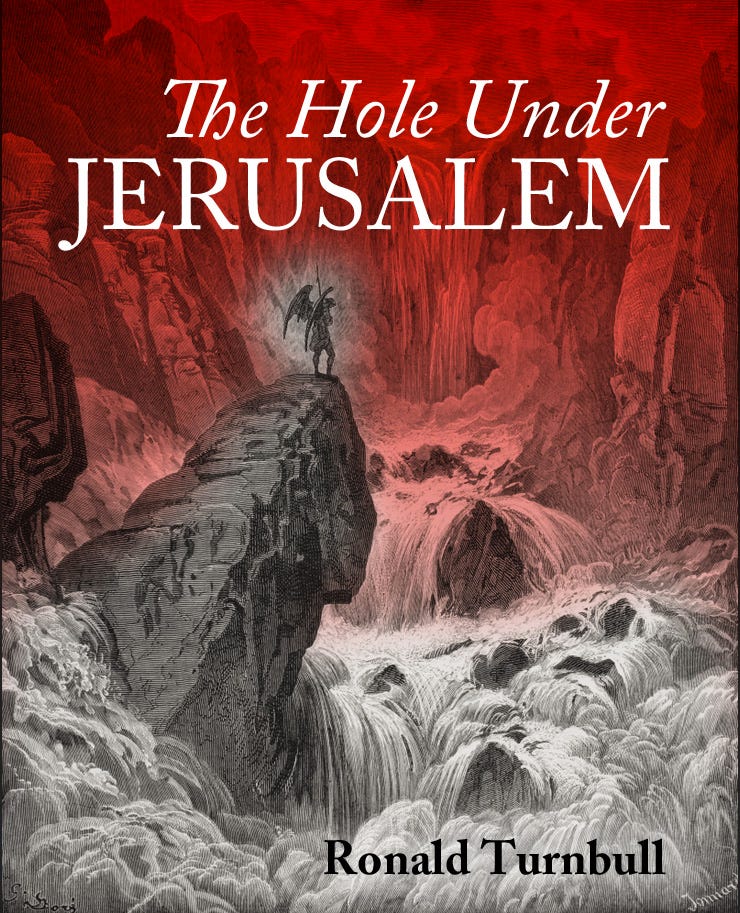
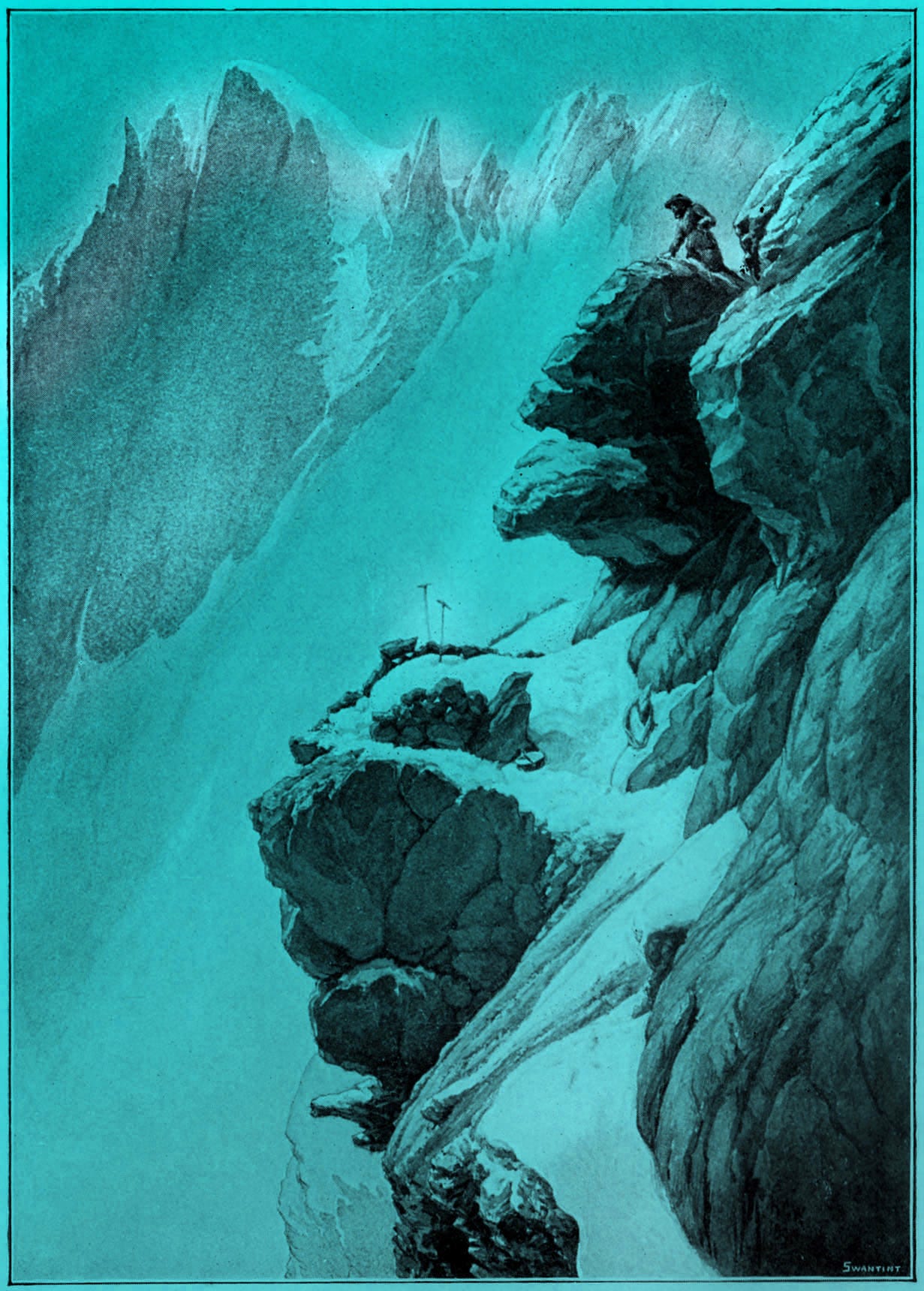
Main illustration: Gustave Doré, illustration to Dante’s ‘Inferno’. Second one, The last bivouac of Messrs Donkin and Fox in the Caucasus, from a drawing by Mr. Willink after a sketch by Capt. Powell. Frontispiece from ‘Adventures on the Roof of the World’ by Mrs Aubrey le Blond.
Some fun and creative stuff. And I'm all for outlawing that chalk you climbers plaster all over the cliffs. : ) 160,000 sounds like a lot, especially for laymen not into the arcane vocabularies of geology and mountain climbing. I like the short story solution, which if strung together could add up to your ambitious 160 k word ascent.
I enjoyed the read very much. Loping along with your narrative was fun. But if a prologue is a scene setter, I was left confused. 160,000 words later might I still be ?
I’ve never read Dante’s Inferno, but over the years have enjoyed artist’s limitless imaginings of its hellscape.
Whatever, you’re writing is wonderful, and it’s difficult to imagine you penning a bummer.
The illustrations you chose are exceptionally good too.