
Crossing the Cheviots
A hill crossing that's also across authors: a combination newsletter with Cheviot-appreciator Yasmin Chopin of 'Home and Place Writing'

What do you see, when you look at the long, grassy ridge of the Cheviots? It depends a lot on how you’re looking at it.
Late in the afternoon I come down an old green miners’ path, and cross the A68 at Carter Bar.
In 45 miles along the border ridgeline, this is the only road crossing. The main road to Edinburgh rises to a couple of lay-bys, passes between a saltire flag and a cross of St George, then dips between two hills into the slate-grey plains of the Scottish lowlands.
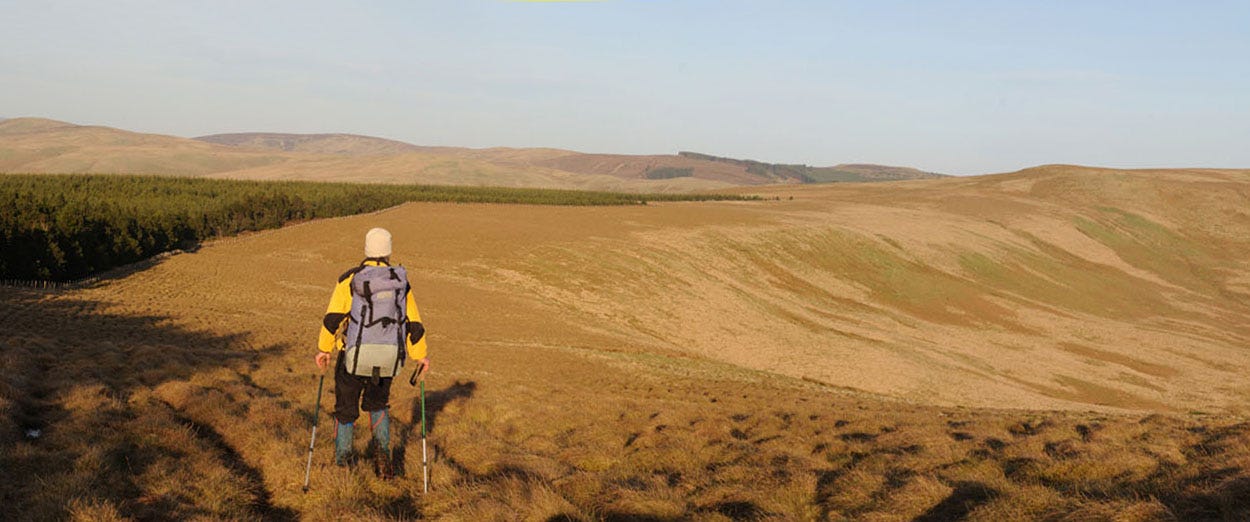
Into the evening, I head on along the wide, grassy ridgeline, gently rising over Leap Hill and Hungry Law. Where a corner of plantation comes up from the English side, I find shelter and deep heather for a night out under the trees. Hundreds of stars between the spiky branches; and then onwards into the early spring sunlight.
The wind whispers through the yellow grasses, scarcely louder than my own breathing; cool air moves across my face. The sky above is the chalky-blue of a wheatear’s egg: I came across a wheatear nest on the moorland once, more than 40 years ago now, but I think I remember the colour.1
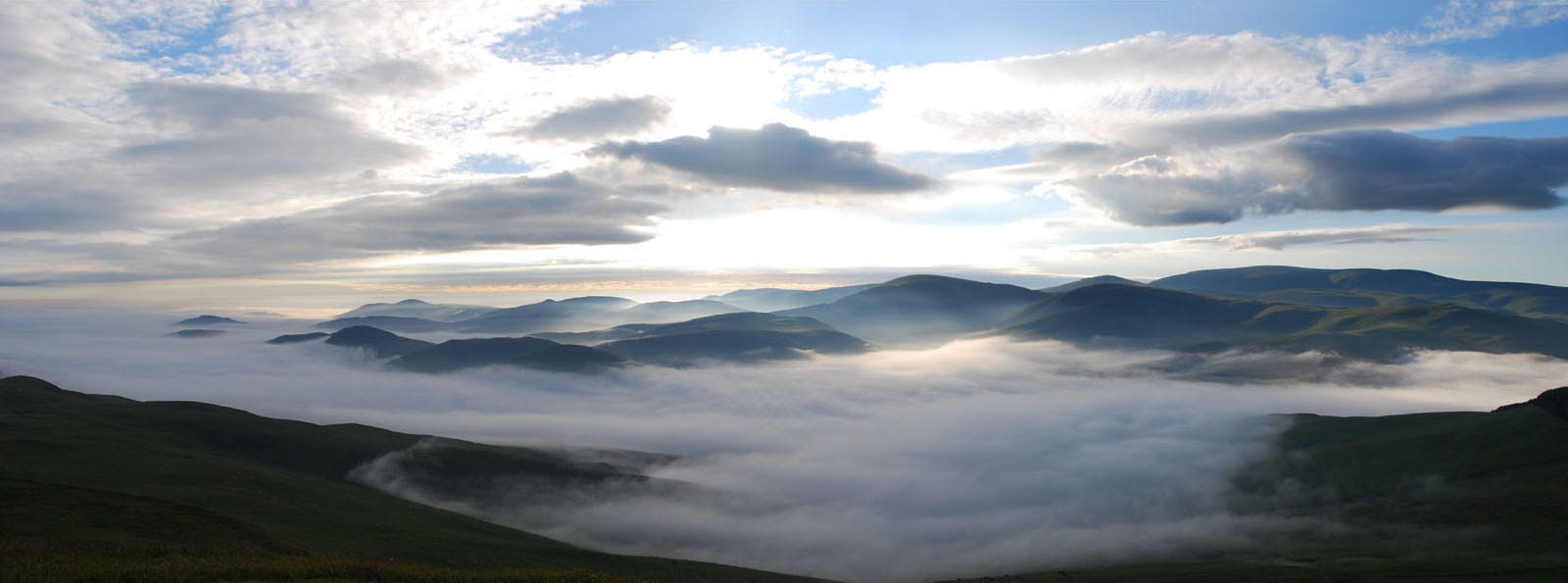
It’s too early in the year for the wheatears themselves, along with their brown counterparts the meadow pipits. In another month the pipits will be asserting their property rights, filling the sky with twittering song like a budget version of the skylark, supposing skylarks themselves were a bit too posh and poetic for you. On the right, the hill curves down to the deep Coquet valley, and the spruce-tree monoculture of that corner of Northumberland. But on the Scottish side, long green valleys wind out between rounded hills; the low, golden sunlight is caressing their sexy curves.
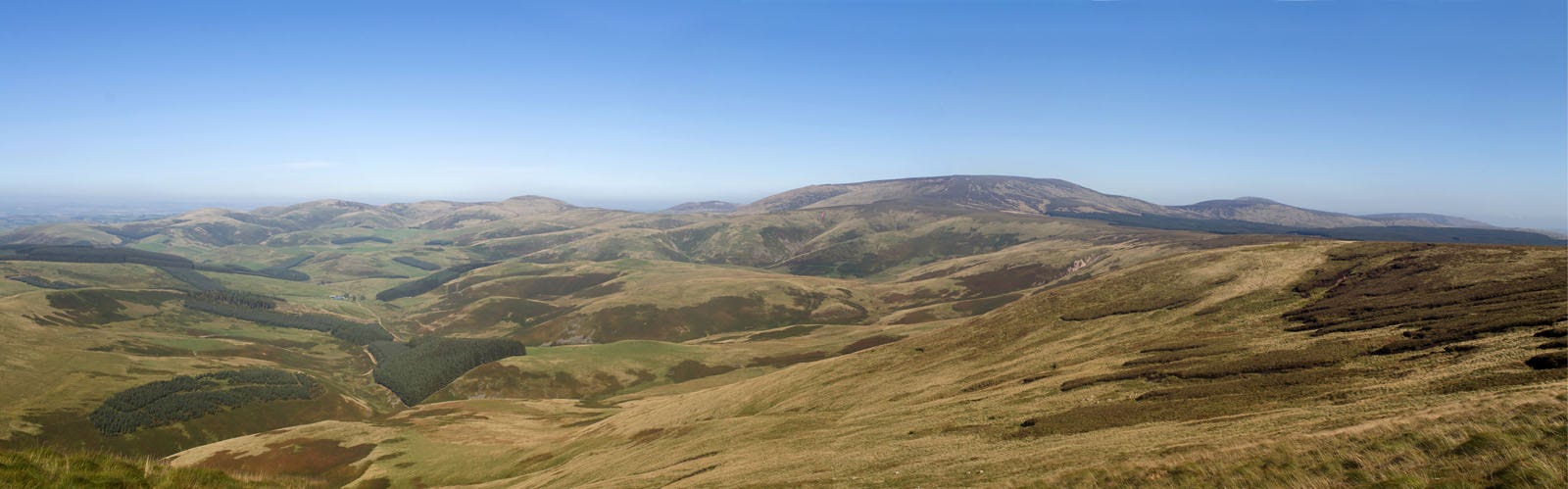
Twenty miles ahead, invisible still in the blue haze of morning: the range’s high point, the Cheviot itself. Nobody else about; a gentle breeze and the sun shining; it’s a peaceful scene.
Well, but is it?
John Berger’s book ‘Ways of Seeing’: we read it a lot in the 1970s: but it’s still worth looking at today if you come across a copy or find it online. Right at the start, he shows you a cornfield: golden in the sunshine, a flock of rooks in an arcing curve above it, a sky painted in swirly colours. You can almost feel the rising warmth of an early autumn day.
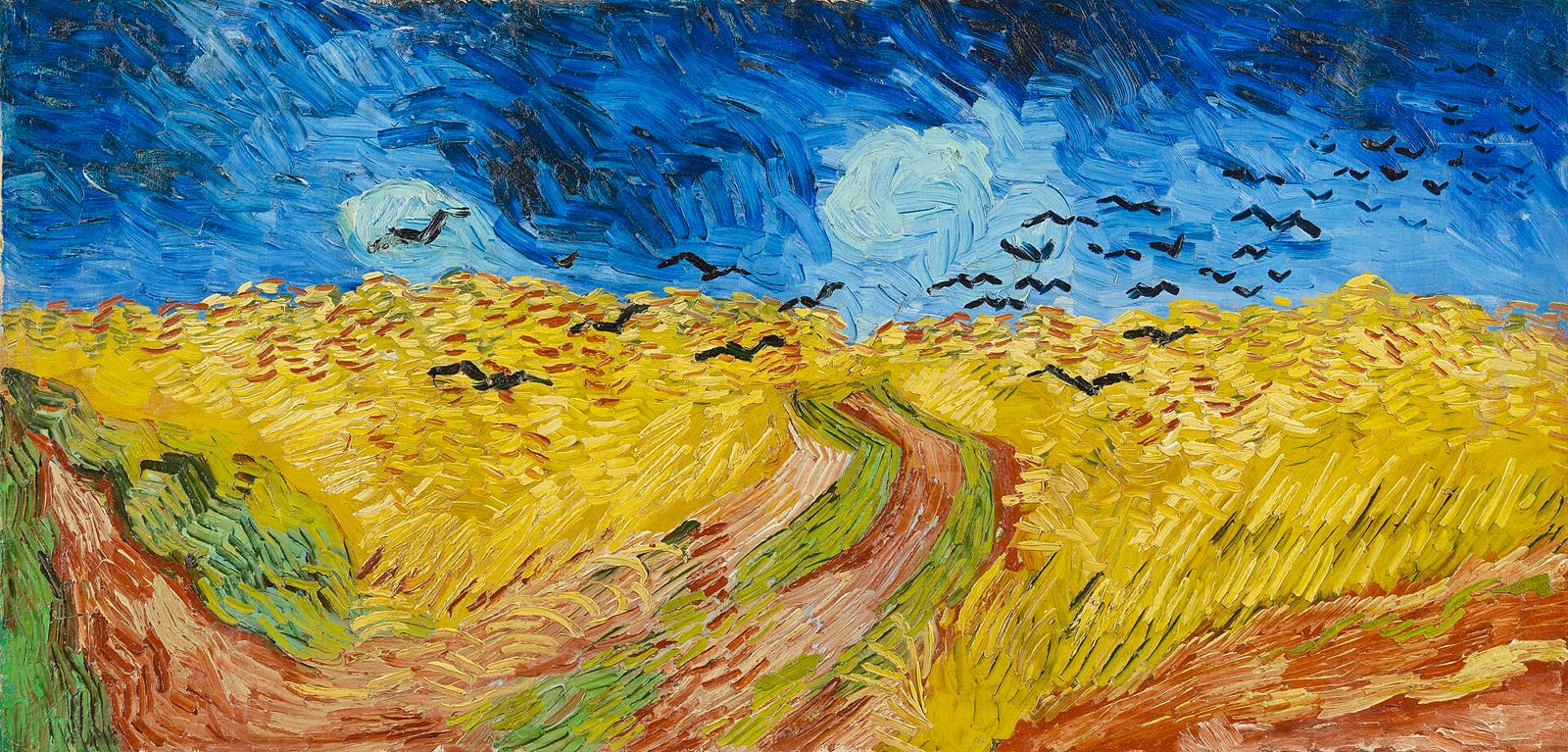
Turn the page and you see the same picture again. But this time, it has a caption under it: “This is the last picture that Van Gogh painted before he killed himself.” And, of course, the whole picture changes. The black rooks are sinister, threatening. The swirly sky is confused, oppressive. Not the same picture at all – except, of course, it is.
And the Cheviots: the shapely, grassy-green, unpeopled hill range separating north-east England from south-east Scotland: it is, as I said, a peaceful scene. Isn’t it?
Well, here’s a Border ballad from five hundred years ago:
O Westren Wind, when wilt thou blow
The small rain down shall rain;
Christ, that my love were in my arms
And I in my bed again!
Who’s the speaker here? According to the poet Robert Graves2, this is a fighter lying out on the moors, dehydrated from loss of blood and dying from his wounds.
For yes, the peacefulness here is actually a scene of warfare and desolation. In the White Mountains of Crete, there are whole villages abandoned and crumbling because of blood feuds between rival warlords. And it’s the same here, except the houses themselves have faded back into the landscape so you don’t even see them.
For nearly 300 years, from Bannockburn in 1314 to the Union of the Crowns in 1603, the hill country between England and Scotland was a war zone: a place where neither monarch ruled and it suited both of them to keep it that way. Instead, your security depended on your family warlord in your own local valley, and lasted only until a stronger warlord from across the Border, or just from the neighbouring glen, came over the hill on a moonlit night to burn down your cornfields and steal away your cattle.
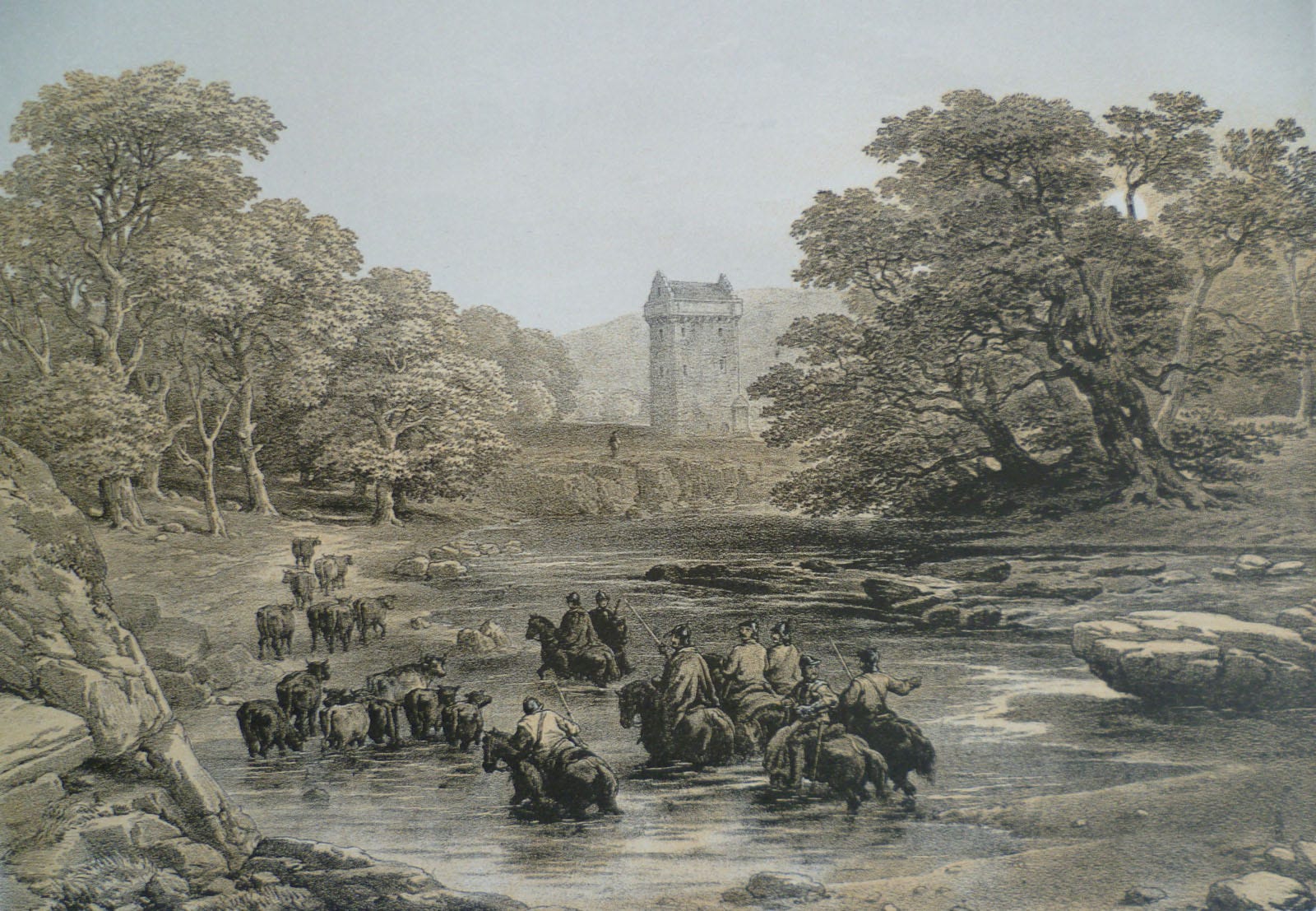
My own family surname represents a Borderer who cleared out some time in the 16th Century and managed to start a new life as a sheep dealer down in Yorkshire. Those who stayed – they got killed, or they died of starvation after losing their livestock. Leaving behind the tall pele towers along the valley floors, and the ballads collected two centuries later by Walter Scott. A fine set of ballads they are at that, exciting horseback rides along the hill ridges, bloody battles, warlords leading ‘hot trod’ reprisal raids or treacherously reneging on their commitments made under the ‘black mail’ protection money racket.
The crossing at Carter Bar: that’s where one of the border battles took place, the Redeswire Fray. On a day of supposed Border truce, a quarrel over a card game erupted into a full International Incident. (My ancestor, Fatlips Turnbull of Bedrule, gets a mention in the ballad as the sensible chap who’d gone to the card game already wearing his leather armour.) On Windy Gyle there’s a pile of stones where Lord Russell got killed on a different truce day. At the hill foot near Morebattle (yes, the clue is in the name) stands the forbidding Cessford Castle: stronghold of the Kerrs, the most feared of the riding families on the Scottish side.
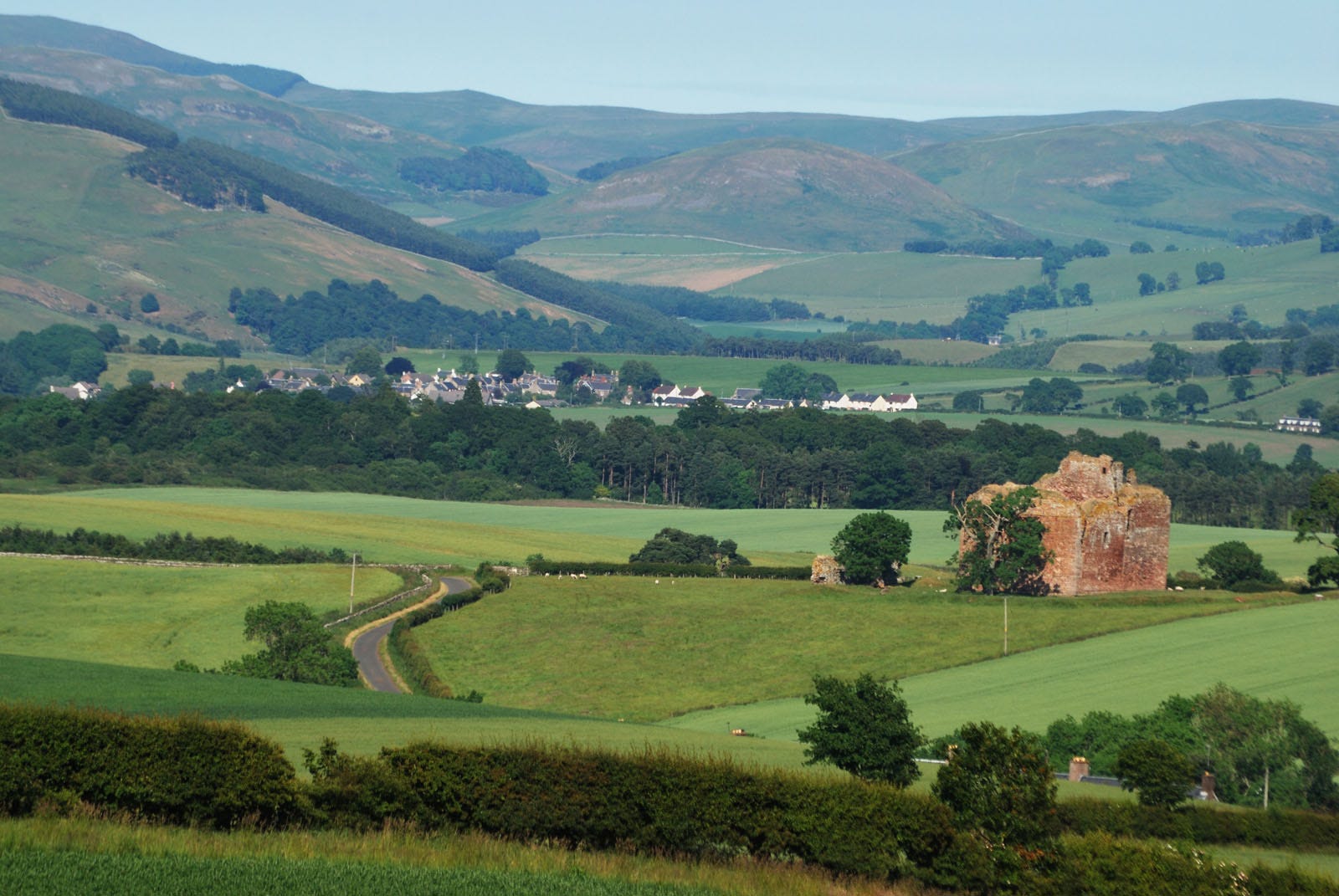
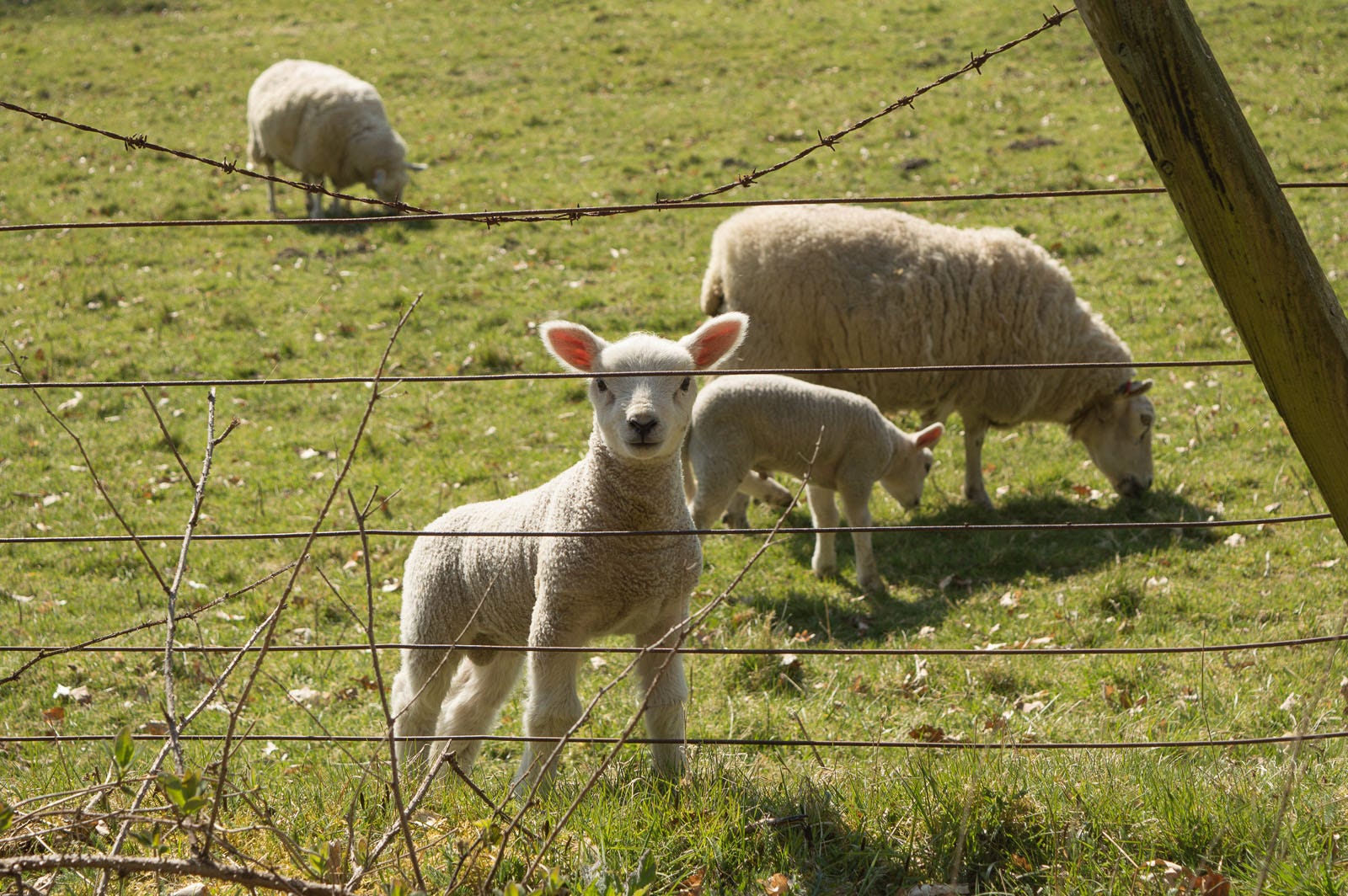
Two hundred years later, as Walter Scott was collecting the ballads3, the descendants of those local warlords found it more convenient to turn over the still-empty glens and hilltops to large-scale sheep. We hear about the Highland Clearances: the Lowland Clearances were the same, except that, thanks to those Reiving Times of previous centuries, there were fewer people to clear. So that now, the Cheviot is the big granite lump that’s the high-point ahead of me along the range: but the Cheviot is also a notably effective breed of upland sheep4.
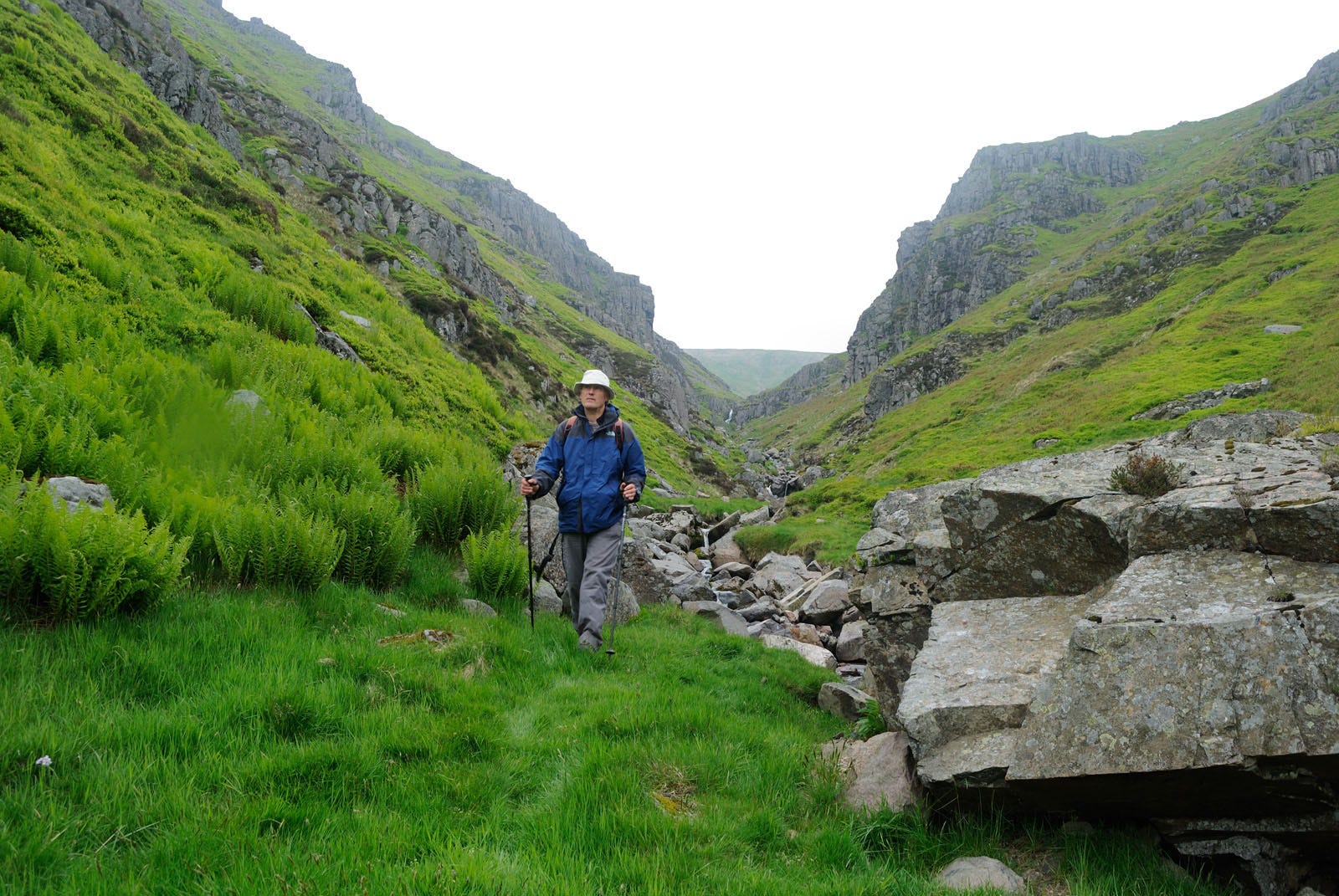
It’s mid-afternoon when I reach the Cheviot (the hill, rather than the sheep). Being a big flat-topped lump of impermeable pinky-brown granite, the summit of the Cheviot is a swamp. I set off across it on a compass bearing, threading between the peat-pools, until the ground suddenly falls away at my feet. I’m looking down into a huge hollow of the hill: the fabled Hen Hole.
It’s haunted by the fairies; if you’re unlucky enough to get an earful of their magic music, you wander around in the Hen Hole for ever, until the wind blows over your white bones. It was also, of course, a handy secret spot for hiding any stolen cows. The stream runs out between walls of ragged granite, peregrine falcons up there, and a peaty waterfall at your feet.
Then a long walk out along the College Valley. Four lonely farmhouses, and little woods, and a silver river. But on either side, every second hilltop has a hillfort settlement: Ring Chesters and Great Hetha and Yeavering Bell. You can make a hill circuit visiting eight or ten of the things.
This must have been a busy, well peopled place – back in the Iron Age.
And here’s Yasmin’s response to the question at the top ‘What do you see when you look at the Cheviots?’
I trudge to the five bar gate in Wellington boots because it’s winter and the garden slopes very slightly downhill and ground water drains into a pond and the surrounding earth is spongey and moss covers small rocks. The Cheviots have become part of my landscape. Having recently moved from Cambridgeshire, England, to the Scottish Borders this range of hills is a welcome change to the flat landscapes I’m familiar with. The vista appears only when I’ve emerged from a clump of trees. Exactly what I will see is a daily surprise. On reaching the gate my view of The Cheviots is unobstructed; 180 degrees from the east through south to the west. I stand and stare. The land mass, a constant presence, rises gently in the distance. I survey its curves. Assess conditions. Study the light. Except when mist hangs in the air or fine mizzle shrouds them. Except when clouds hang low and touch the ground. Such days are frequent at this time of year. Yet I’m attuned to the strange invisible dormancy, sensitive to the effect the rolling land forms have on the weather, and I imagine the bone deep chill fought off by hikers in their protective layers of clothing and sturdy boots. I turn and listen to the soft sucking sound of my steps as I take the short path home and with every heartbeat I replay the scene in my mind. This daily ritual.
Meanwhile, for the corresponding cross-post across on Yasmin’s ‘Home and Place Writing’

Anyway, I just checked in the bird book.
‘English and Scottish Ballads’ edited Robert Graves 1957; there are a few second-hand copies on the Internet at under £10.
Minstrelsey of the Scottish Border 1803. Get it on Project Gutenberg
Listen, I’m not great on my sheep breeds. It’s just possible the ones in the picture might be Texels.
Lovely to read the swap with Yasmin (and to be reminded that I've never visited the Cheviot - I'm now working out how I might organise myself to do so).
Interesting how you write about the sexy curves of the Borders hills as viewed from the Carter Bar - a view I never tire of. It reminded me that painter William Johnstone saw them as a succession of female shapes and wrote “You cannot paint these subtly contoured hills without attempting to understand their anatomy: their sensuous feminine curves cover sharp elemental bones. There is always, for me, a sexual metaphor in these barren hills.” He was a Borders farmer who went on to become head of the Camberwell School of Art and a leading expressionist painter.