
Below Foxbones Rock
Short story featuring a climb plus two peculiar poets [2300 words 10 mins]

You see yon precipice—it wears the shape
Of a vast building made of many crags;
And in the midst is one particular rock
That rises like a column from the vale,
Whence by our shepherds it is called, THE PILLAR.
Daybreak, and the rooks is perched all along the branches of the bare oak tree. The noise of them fills up the air as they rise and wheel about and come down again. The sky, it’s kind of thin and yellow like a lemon. Frost crunches under our boots, my stepdaughter Jemima a dark shadow beside me as we opens the gates, ready to drive our little flock of Herdwicks up on the mountain.1
Our Jemima she’s 14 now, with her own dog. She takes her own share of the work, and more, as we eases the sheep gentle-like along the narrow grass above the cliffs, into the meadow up there in the hollow of the mountain. The sun, it’s just gotten on the other side of the dale: first the tops of the hills there, then down it comes over rocks and the scree stones and the bits of juniper. Our side, it stays black and dark, blocked from the new day. Reason being, the high black crag of the Foxbones Rock, the lumps and spikes of it sticking up against the sky. But the sheep they’re heads down, contented like; the frost hasn’t reached this high up the mountain, and this hollow among the rocks, it’s not been grazed all summer. We call in the dogs and sit ourselves on our usual knoll, among all the big stones what’s fallen down off the Foxbones Rock. The sheep is spread out across the grass and we be eating the bait what my Mary lays out for us in the evening last thing. There’s no bread anywhere like what my Mary makes.
And Jemima, she asks me the question I been expecting – waiting for. Waiting for these fourteen years, I guess. “Father: tell me about my father.”
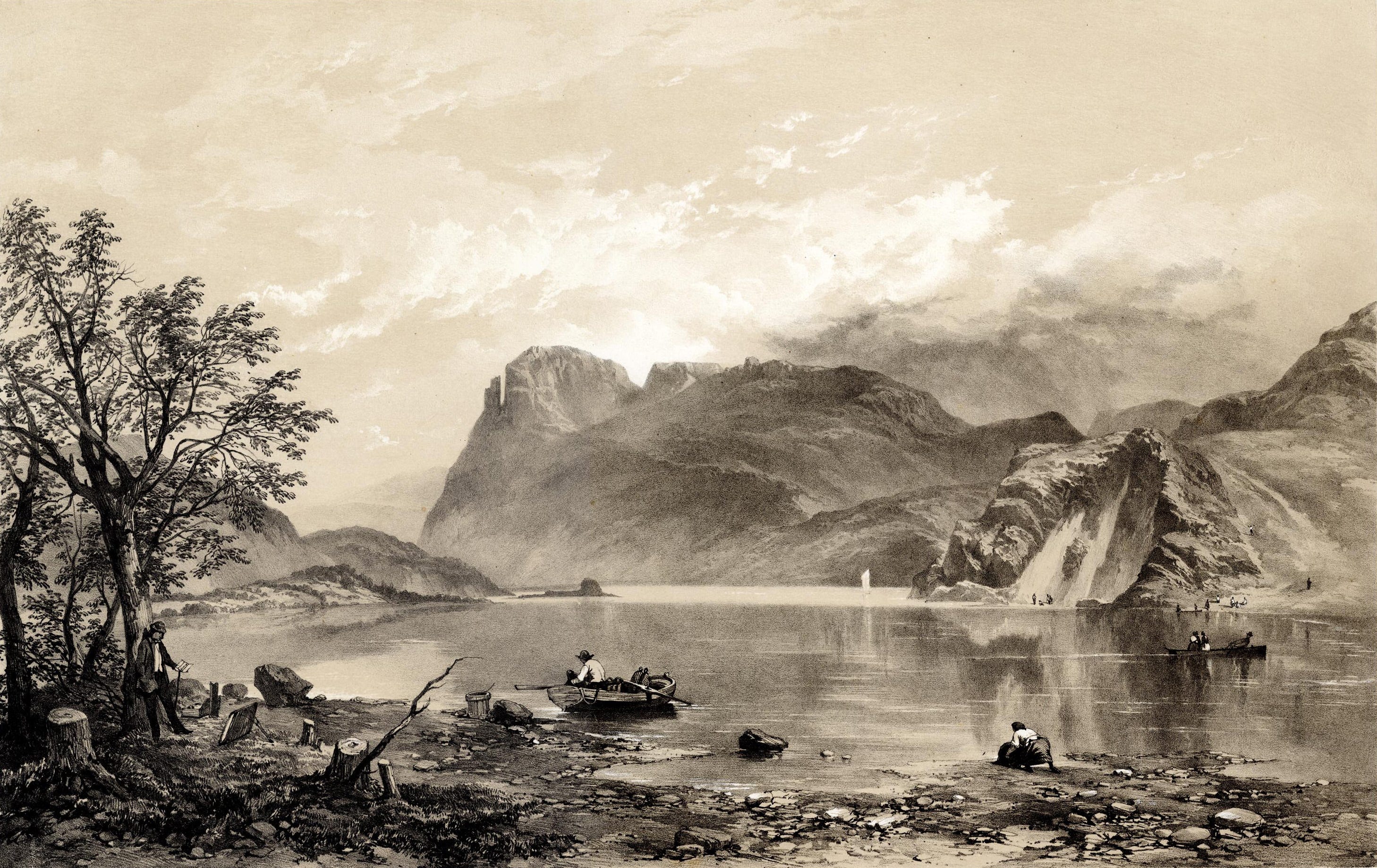
Redboy Hugh. Every time I look at our Jemima now, striding ahead of me up the mountain. The way she handles her dogs, she minds me of Redboy her father. And where else should she be asking after him: where else but here, underneath the Foxbones Rock?
Below us, between the two slopy sides of where the stream go down, we’re seeing the floor of the valley. The silver river in atween the birch trees, the thatched roof of our house, a bit smoke from the wide chimney what Mary’s grandfather built. Mary, she feeding the hens now. Tossing down hay for the cow, ready for the milking.
Redboy Hugh. Short and slender he was, but broad in the shoulder considering him no more than a boy. Still a boy, really, even when he dies. Dies, here on the Foxbones Rock.
Young, yes. That be the way to start in on it. “Remember, Jemima, he was very young, us all were. Me, your mother, all of us. Only a three-four years older than you are now: that’s how old Redboy be when the Lord takes him.”
“When the Foxbones Rock takes him.”
“Reet, when the Foxbones Rock takes him. And your mother – ”
Mary Robinson. So young; so beautiful, with her peat-brown eyes that you could look into like deep pools of the Liza River. So young, and so in love with Redboy Hugh –
“Yes,” says Jemima, beside me on the rock-knoll – a raven pacing the grass a few steps away, its little black eye on the crumbs from our breakfast. “Yes, but just how did he come to do it?”
“How does owt happen? It starts off quite casual like. A casual wager, not even a wager, a casual remark. Sure nobody in the history of the world has stood theirself up there, up on top of Foxbones Rock. It might even be me that makes it.” It was me. “We goes up to have a look at it, up beside the waterfall there. And we – he – climb a bit way up there. It be too difficult; he’s scared, Redboy; he come down again. But by then the Rock have – the idea of it – it seized ahold of him. He has to keep coming back. You won’t understand; I diven’t understand it my own self.”
Jemima’s a bit scowly-like, in the sunlight. “No, I means how. What way did he go up it?”
Our Jemima, she’s never knowed her father. But Redboy Hugh, he’s there, part of her nature. I see him in the way she strides up the stony grassland, the way she looks up at me now. Not going to let go until I answer her.
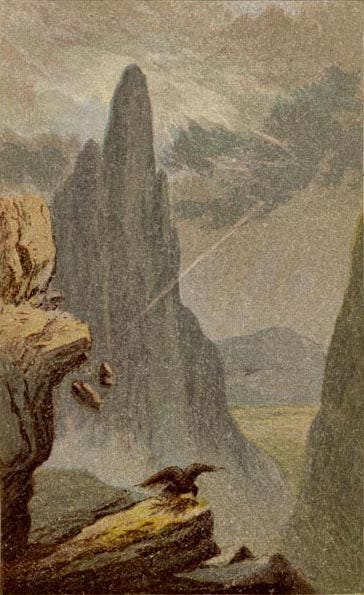
And after all, Redboy, he was her father. “You see that place up yonder where the rock slopes more gentle, like a roof on a house? He gets up on it there, up at the corner there. Then walking across it. Where the rock’s got a fold in it, like the corner of a room? He meant to go up there, is what he told me. Yes, we were eating our bait, we were, right here on this rock here. And you see at the top of that corner, there’s a wee notch in the rockface?”
It be very still and quiet up in the hollow of the mountain under the Foxbones Rock. High above us a small beck comes down the stones, I can hear the sound of it. I can even hear the sheep around us, tearing mouthfuls of the grass. “Through the notch,” I tell her. Her eyes looking up at me, looking up at my face, like the sheepdog what’s waiting to know where to run off next. “And then up that steep gully, the gap between the cliffs.
“But it’s coming down again, that’s where he has to be careful. That be where – where he falls. If you look very careful like, the notch I told you? There be another notch in the rocks there, five yards further up maybe. He don’t realise that. Coming down again, he passes through that upper notch instead. And trying to lower himself from there, there aren’t no footholds, nothing to hold on to.”
“How do you know all of that, Father?” That gaze of hers.
“Oh – I don’t know it, me. I be – you know – story-telling, like Giving you the best I can understand. What I work out later, from where – from where we find his body.”
That look of hers, the blue-grey eyes like her father. Redboy. All the young women were half in love with him. Partly because he just don’t care that much. Goes his own way, to please his own self.
“Did my father know that mother was – that I was already there, inside her?”
“Ah,” I say. “No, he never knowed that. Of course, that would have made it different for him.”
Which, it’s a lie. Redboy knowed he has a baby on the way, a son he thinks, he tells me his self. Take the boy climbing on the rocks beside the river, he says. Children love to climb. He tells me his self, two weeks before he sets off up the Foxbones Rock.
“Oh look, the old ewe,” I say. “She a bit too far up the scree stones there. Shall you go up after her now?”
“Have you been talking to her,” Mary asks, warm beside me in the bed. “About the Rock? She’s so like her father.”
“She needs to know about her father. Needs to be proud of him, mebbe.”
Mary, she don’t say nothing. And I wonder if she thinking about Redboy. She won’t never love me the way she loved Redboy – I don’t expect it, we were young then. But we raised us two fine bairns of our own, here in the woodland pastures beside the Liza River; two young ones and Jemima too, Jemima what I’ve felt like my own child right from the start. And the sheep, they be thriving as well.
•••
Was a sennight after that, roughly speaking, them poets come up the dale. The two of them, all dressed up in black, brother and sister they say, all sorts of strange stories about them two. They stand there, looking up at that Foxbones Rock, well they pretty much have to don’t they, way it hang over our house like a curse from God. Yattering away like two sparrows they are, all the time it takes me to muck out the byre. Him striding around, tall fellow too but kind of stooped like a heron stood in the stream. Striding around saying stuff in that funny talking they have, that way folk talk two dales over west way. Her writing it all down in a little book. Then they’re off, up away to the top end of the dale. Pretty goers they are too. Not like a proper shepherd, nothing like that, but pretty goers all the same. We talks about it come dinner time, me and Mary, even our Jemima puts in a few cheeky remarks about them funny outfits. Then we forgets it, pretty much.
I only mention it now, on account of what come later. After what Jemima do, and I do, and – well now, I coming to that.
On account of, come the spring time and there’s me up betimes, before sunup to look to the lambing. We have the lambing late on in this dale, first lambs around about May Day. They’re not the biggest of fat lambs come the back end but we make it up with them being River Liza, mountain raised.
Any road, what I’m coming to, Jemima she be up out ahead of me, her boots missing from beside the door.
She’s not around the lambing fields. And I look up. Up above the house-chimney, the great black pile of the Foxbones Rock, hanging there against the sky like the wrath of God. But my ewes need me.
Natural enough, Mary wants to know where’s our Jemima. “She went up the river,” I say, “thought she might find the plovers nest up there.”
Which mebbe she is but me I got a feeling she somewhere else than that. That not the first time I tell a lie to my Mary, but it ain’t a thing that comes natural to me. I head up above the birkwood, clear out some clarty ol’ ditches what, Lord knows, they been needing it all year. And I keep looking up at that dirty great black rock. That rock where Redbone Hugh dies, all them years ago.
Just as I get the water flowing right, thinking what I can do next or do I have to head off up the mountain after her. Well now, here’s our Jemima coming down the hillside. “Did you find it,” I ask her. “Did you find where the plovers are nesting this year?”
She laughs at me at that. And I notice the moss caught under her fingernails.
“Father, I climb it. I was up there. Just now, just as the sun was up.”
The sunlight, it’s right down the hillside now. The mist rising off the River Liza, mist rising in clumps up the hillside the other side of the dale.
“And I have to tell you summat. What you say to me, the stone gully, the little ledges out on the left. The upper notch, that tricking notch when you coming down again. You been there, ain’t you? The Foxbones Rock – you climb it too. Father? Didn’t you?”
Where we standing, I can smell the fresh buds on the birch trees. And Jemima, she grinning at me like sunbeams. “And here’s another thing, Father. Up at the top of the rock, can you guess what I find there? A wee cairn of stones.”
“You find a cairn?”
“And among the stones of the wee cairn, a little medicine bottle. With a name inside it. A name I recognise. Your name, Father.”
We look at each other, there among the great stones fallen off the Foxbones Rock.
“Jemima,” I say, “one thing for sure. We not going to tell your mother about this, reet?”
Which we don’t, of course we don’t. But you know what? Come the autumn time, them two poets, they come up the dale again. Poke their heads into the lambing shed, ask about the Foxbones Rock. Got a new name for it they made up, real interested they are. Well they have to be, don’t they? Hanging over the place like the curse of God, I think I say that already back there.
So we tell them, me and Jemima. I mean, not the real story of it all. What you think us are, some sorts or rustic fools, they put stuff in the newspapers, them poets do, where folks might read it.
Jemima makes it up for them mostly. She can fair run on, our Jemima, when she gets the mind to it.
I pity the poor fellow as ends up marrying her. Going to have a handful, he is.
Meantime, I get Jemima to write it all down – she can do the writing, Jemima can. Put it away in the back of the family Bible, under Deuteronomy or somewhere, somebody find it maybe in a hundred years.
Wouldn’t want them poets to have it all their own way, would us?2
I usually leave at least two months between short story options interrupting the posts about mountaineering, geology, etc. But this one attaches itself to the 200th anniversary of Pillar Rock’s ascent in 1826.
The opening lines are from Wordsworth’s long poem ‘The Brothers’ (1800). For the avoidance of doubt, the two poets in the story are William and Dorothy Wordsworth.