
The World as Turnip
Happy 300th birthday to James Hutton, Scotland’s genius geologist. [1500 words, 6 mins

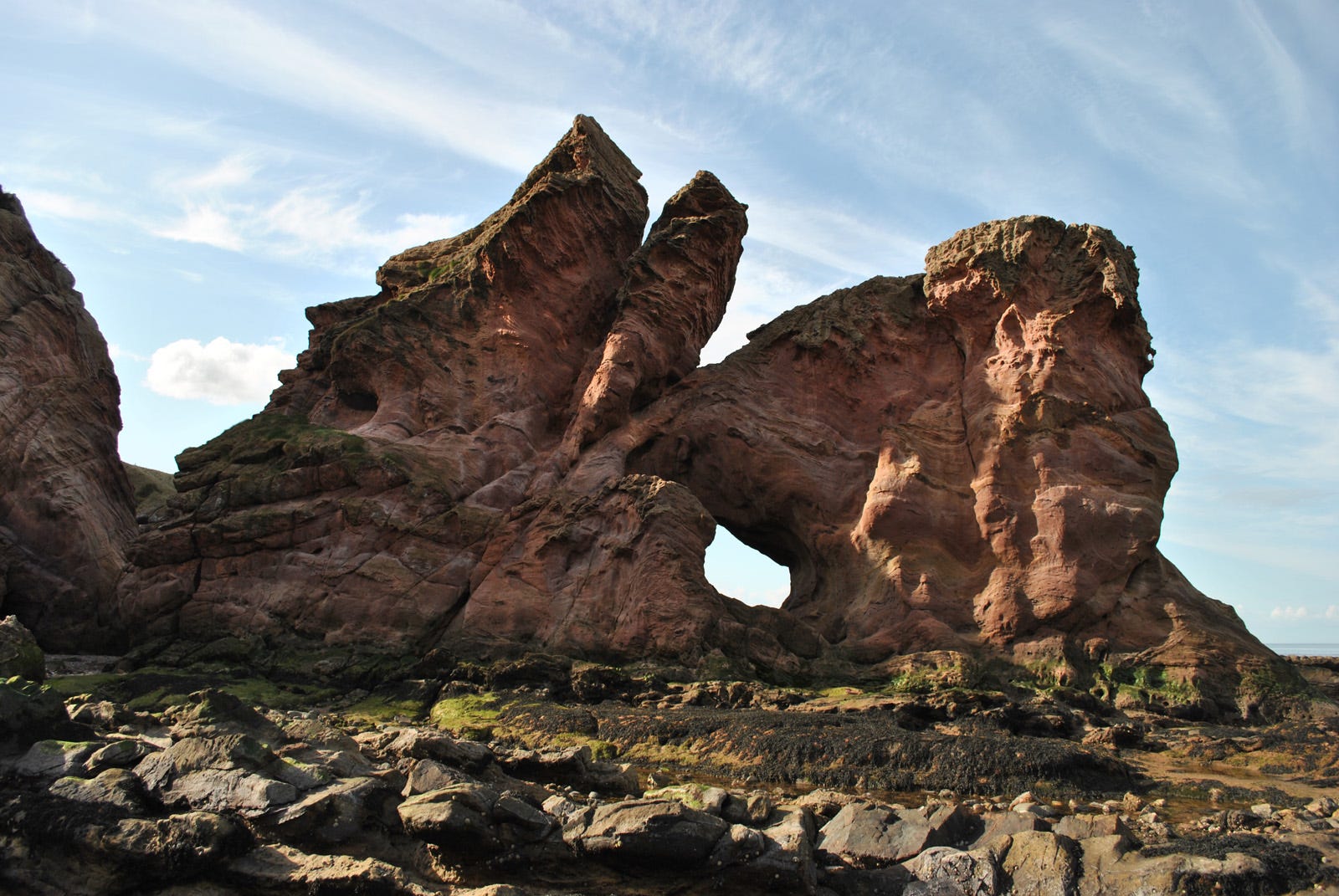
At Cove Harbour, at the start of a walk down Scotland’s south-east coast to the English border, I passed along round-edged, red-layered sea cliffs. These rocks were obviously made out of earlier sand: the Old Red Sandstone, laid down in rivers or shallow lakes, or still preserving the swirl of a desert sand dune.
The wide beach of Pease Bay was the last chance to stop for a swim; and many were doing so, as the tide moved in over the sun-warmed sand. Behind the bay, though, not layered sea-cliffs, but caravans, laid in parallel lines like the natural rock strata that they so conspicuously were not. To travel across the country in a wheeled metal box, so as to live for a few days inside a larger metal box: many find it a satisfying form of fun, going by the size and number of caravan sites all around Britain's coastline. And a caravan really is a whole lot better than a rucksack for putting those interesting beach pebbles into.
Beyond Pease Bay the lanes end and the cliffs rise in hard grey rocks to rough fields where turnips grow out of red-brown sandstone soil. For this is turnip country: and has been since the later 18th Century.
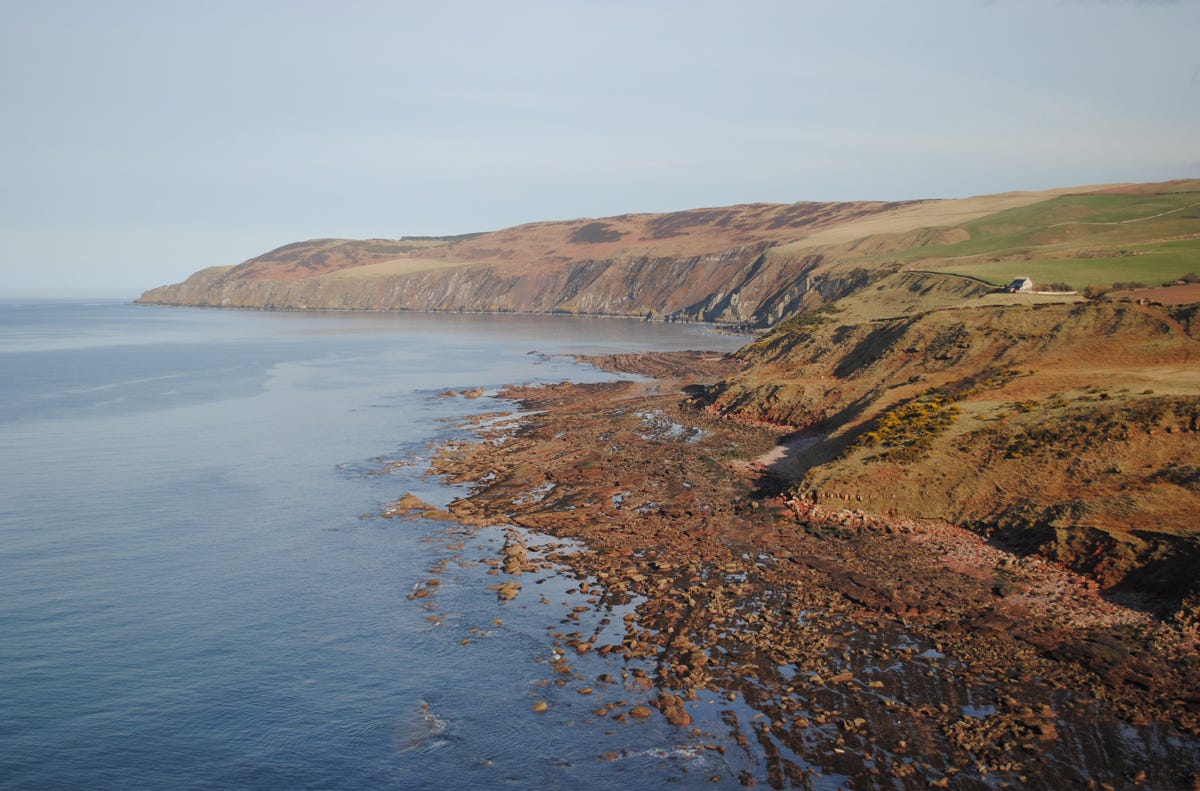
In 1754, a gentleman intellectual from Edinburgh suffered some mental breakdown that left him needing solitude, hard work, and an absence of female people. “I don’t let any of the fair kind of creatures know of my distress; it would kittle the malicious corner of their hearts to hear the afflictions of a hardened wretch whom they could never make to groan.” So he travelled 50 miles south-west, to take over his family farm at Slighhouses, 7 miles due south of where I’m standing. His name was James Hutton, and today is his 300th birthday.1
Currently Slighhouses is devoted to pigs, but back in 1754 it was arable and dairy. The sturdy farmhouse is built of the ochre-brown Old Red Sandstone that also colours the ploughland. Hutton’s dejection gave way to excitement, as he applied some Edinburgh science to fields still managed in the Middle Ages. A plough made of steel rather than massive timber; crop rotations of wheat, then barley, then – yes – turnips. Today’s James Hutton Institute, the research group named after him, has just produced the high yielding green-top yellow turnip ‘Massif’.
Enlightened Edinburgh
There’s a weird word for it: SCENIUS. Made up by musician Brian Eno, opposing the idea that one great man or woman produces a great idea. A scenius is a particular point in space and time where several different people, with many different ideas, combine together fuelled by some distinctive beverage. Wine-and-water in ancient Athens and 13th-century Florence. Coffee in the Vienna of Freud, Schönberg, Klimt and Wittgenstein, as well as in the 1920s on the Paris Left Bank. Eno’s own post-Punk transatlantic scenius with Bowie and David Byrne and Tina Weymouth and Iggy Pop, abandoned their various separate addictions to come together over a nice cup of tea.
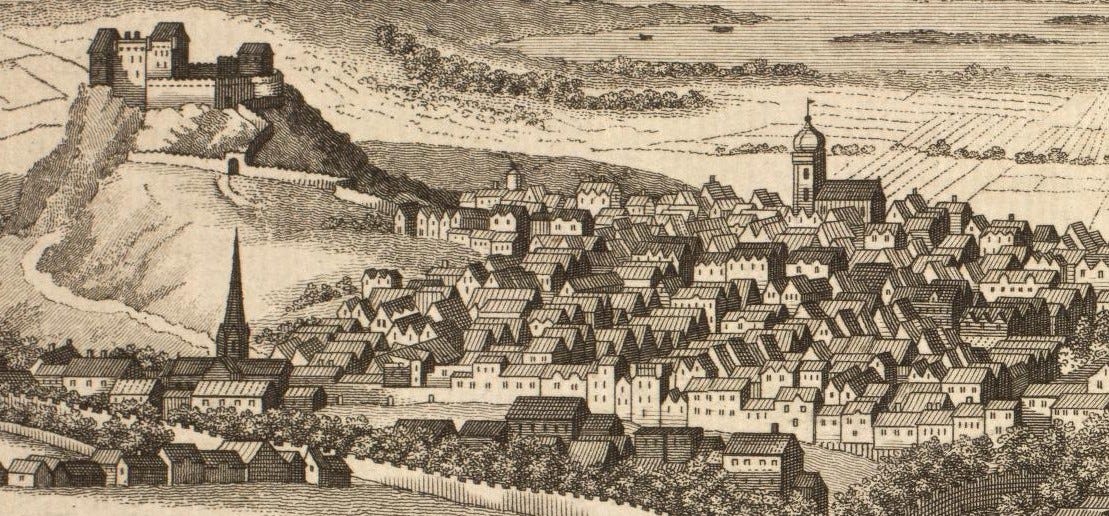
The Edinburgh Enlightment was powered by stronger stuff : substantial claret wines, brought over from France in 50-gallon barrels. There was economist Adam Smith and philosopher David Hume. There was poet Alison Cockburn with her drawing room get-togethers, and ardent young engineer James Watt. Along with James Hutton, currently dragging Berwickshire farming into the late 18th Century.
Excited, as you would be, at having revolutionised Scottish agriculture, James wrote an unreadable 1000-page book about it all. Then went out to dine with his particular friend, Joseph Black the chemist2.
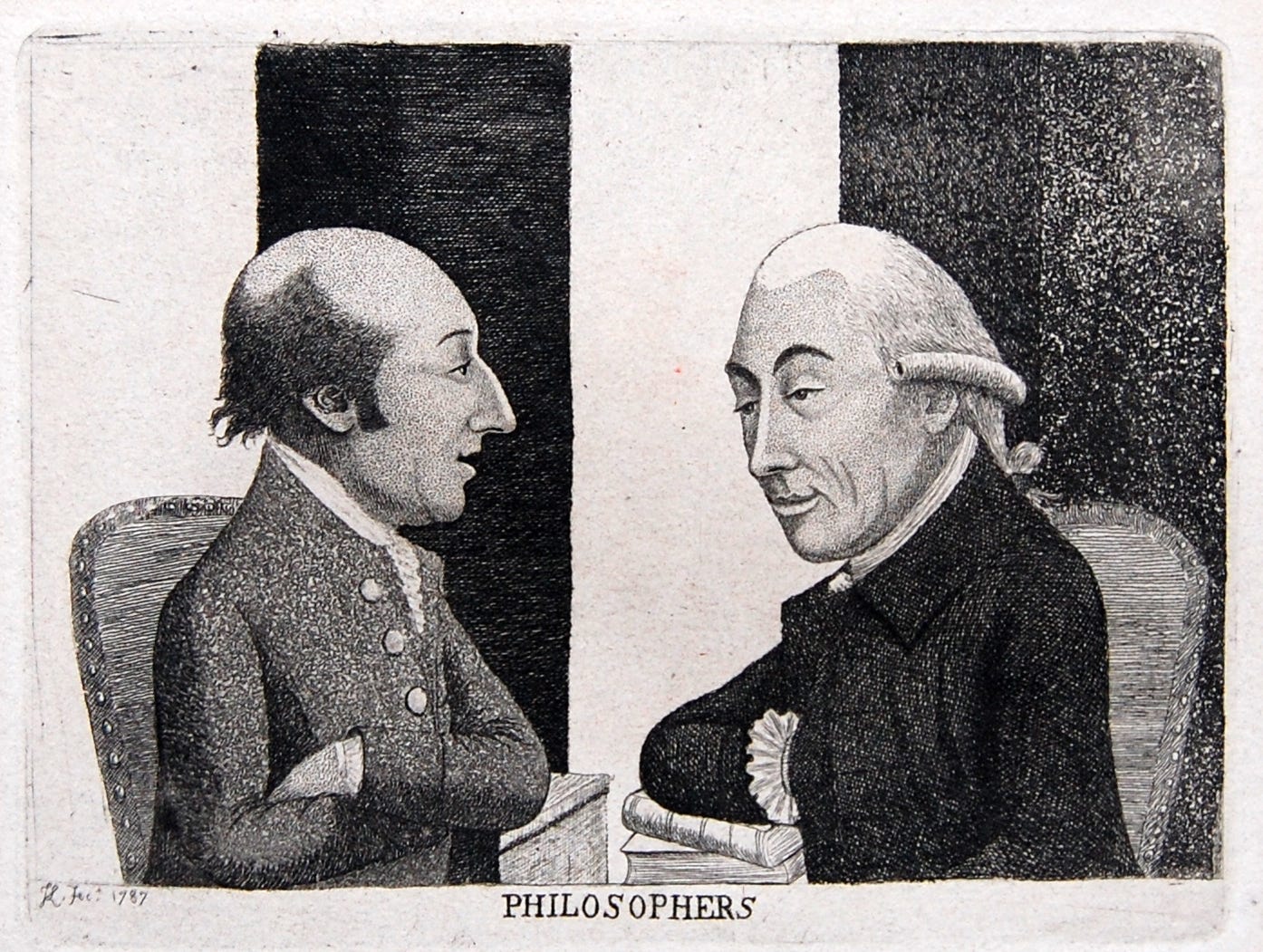
Two philosophers rioting over a turnip
The two of them had come to the realisation that all foodstuffs are composed of the same basic chemical components. And therefore that any ingredient could potentially constitute fine dining.
Specifically, one of Hutton’s home-grown turnips.
They sent away the cook and took over the kitchen themselves. With carefully chosen herbs and spices, they steamed the turnip. They sat down, just the two of them – it was crucial to exclude anyone with a pre-existing prejudice against turnips.
They took up their eating irons.
They carved the turnip. They chewed it.
They looked at one another – a question rising in their eyes.
Joe Priestley spoke first.
“No, Doctor,” he said. “No, it will not do.” Out went the turnip into the street and a proper dinner was ordered in: greasy oysters, the 18th century Edinburgh equivalent of today’s fish supper from the chippie.
From Turnips to the World
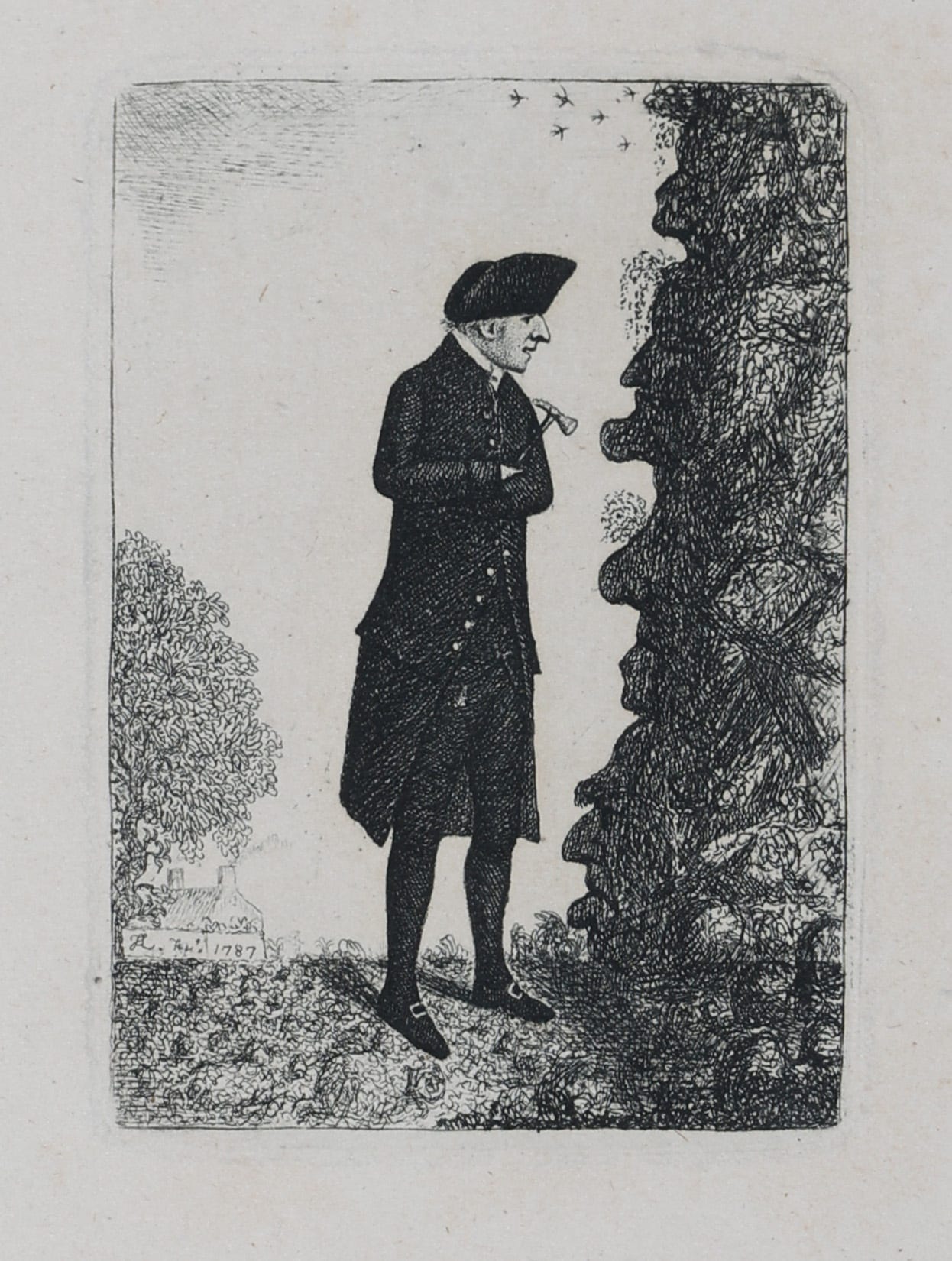
James then turned his quick mind to issues of erosion. The antique runrig system of raised ridges was no good. It just encouraged his soil to get washed away. Instead, his fields were to have drainage ditches around the edges. Which meant smaller fields: and that meant building some stone dykes.
Somehow, he failed to enjoy the drystone dyking. “A cursed country where one has to shape everything out of a block & to block everything out of a rock.... I find myself already more than half transformed into a brute.”
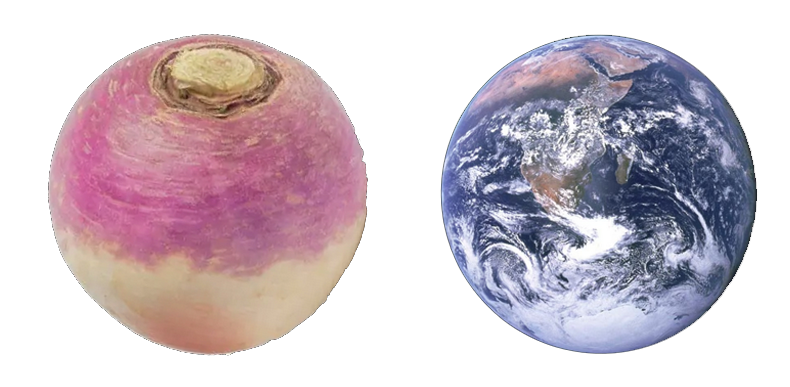
Hauling, shaping and placing the rough red-brown stone; watching it reducing to sand, the sand to soil, the soil running off into the Whiteadder Water and then down to the sea at Berwick. Hutton looked at the turnip root pulled out of his field – and then at the planet Earth.
Turnips make earth: and the earth makes turnips. Turnip-like, Earth’s mountains become sand and gravel washed out into the deserts below, or sediment on the sea floor. Sediment piles and hardens to sandstone. Sandstone rises from the sea to become mountains once more. And all of this was happening in his fields, just below the turnips, and from there on down in the North Sea.
The rain washing away his own farmland, and the North Sea chewing into the coast. And the red sandstone of the farmhouse itself, so plainly formed of sand eroded out of some earlier soil or seacoast.
The point of Siccar Point
With the turnips behind, and the grey North Sea spread out ahead, I come to the high corner of a field. Here is an interpretation board, and a steep-dropping grass slope (there’s a fence to hang on to) down to the rocky foreshore at a place called Siccar Point. It was in 1788 that James Hutton arrived here in a small boat, along with his young colleague John Playfair, and Mr Hall whose father owned the boat.
Because here the red sandstone lies down roughly flat on top of something quite different. Tough, grey rocks which, unlike the red sandstone on top, are steeply tilted and worn away at their ends. And here at Siccar Point, James and those seashore rocks displayed to his friends the incredible ancientness of the Earth.
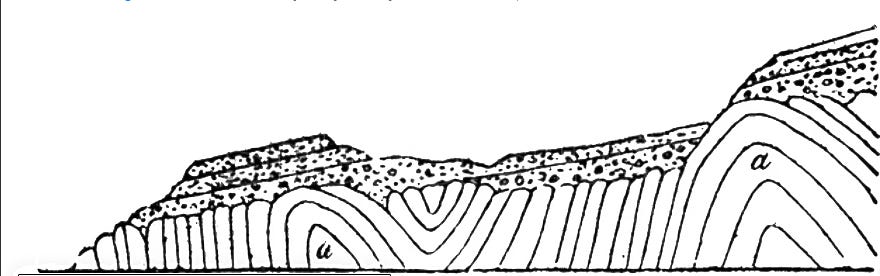
Because here in these seashore rocks we see, not one or two, but four separate geological processes happening one after the other; each one of the four taking immeasurably slow amounts of time. First the tough grey rocks, a form of sandstone now known as Southern Upland greywacke, laid down in layers at the bottom of some sea and forming into rock. Following that, some unknown process folding those rocks and tilting them up on edge: then something else, presumably the sea, wearing away their tops. Only after all that, the red-coloured sand trickling to the bottom of some other, later, lake or sea, then lying there long enough to itself be compacted into rocks.
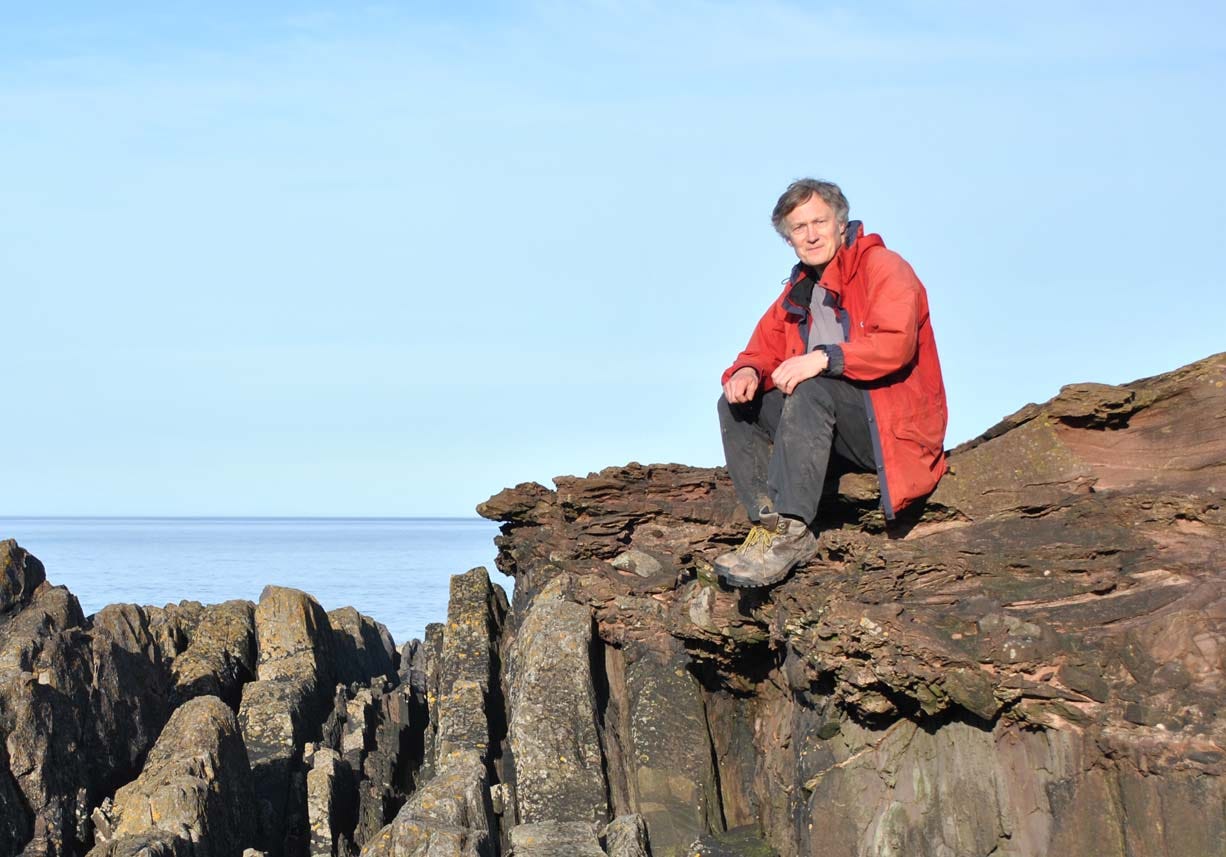
And the sand grains in that underlying greywacke: from what even earlier cliffs and mountainsides had that grey sand itself eroded out?
“In the natural operations of the world, the land is perishing continually.” And he saw all of that sand and debris reforming, at the sea bottom, into the next lot of rocks. “As the present continents are formed from the waste (mineral but also animal and plant) of more ancient land, so, from the destruction of them, future continents may be destined to arise.”
Rocks are made out of earlier sand: sand is made out of earlier rocks: in a process apparently endless and without any visible beginning.
Mr James Hutton wrote another 1000-page unreadable book about all that as well.3
Wed 3rd June 2026 - James Hutton was born in 1726.
Discoverer, among other things, of magnesium and carbon dioxide
James Hutton’s geological investigations covered most of Scotland, in far too much detail to cover here. His other crucial insight concerned the granite, that being one of the rockforms that isn’t formed out of other, earlier rocks. In Glen Tilt he was able to show that it was squeezed up red hot from underneath, rather than precipitated as crystals out of the oceans of Noah’s flood.
Hutton's specific insight was that there had to be some uplift process to counterbalance erosion. He believed that upwelling granite lifted and folded the surrounding rocks - he had no inkling that moving continents crashed into each other raising crumple folds. Just identifying granite as an igneous rock was a big deal.
Lovely piece. We were taken on school trips to Pease Bay no doubt to learn about rocks although I think we just dug holes in the sand. Good to see Berwickshire featuring!