
Photographic Developments
Taking pictures in the hills: impossible, of course, in the days of heavy glass-plate cameras. But some of them did it anyway…

“Given the cumbersome nature of early cameras, with their glass plates and heavy tripods, photography in the mountains only started with film and the lightweight Leica.” And the book chapter begins with the Everest pictures taken on George Mallory’s ‘vest pocket Leica’, then skips to the 60s for an interesting discussion of fashion photographer John Cleare selling pictures of his climbing pals Joe Brown and Don Whillans, in the early days of the Sunday colour supplements.
To save embarrassment, I’m not naming the book – and I’ve even gone to the length of misquoting it from memory rather than actually looking it up. Because, of course, it’s quite, quite wrong.
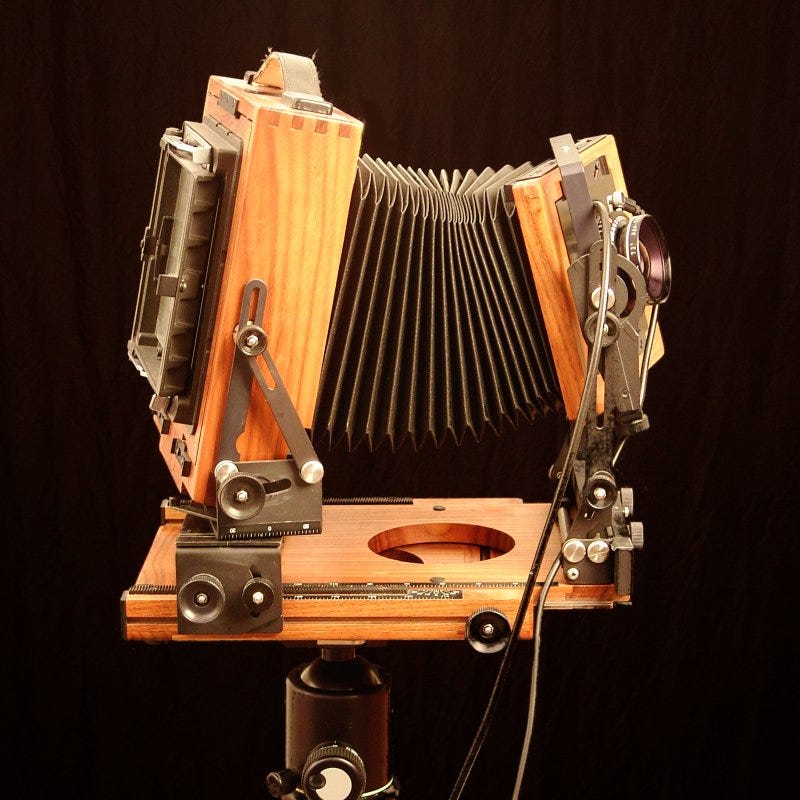
Okay, that’s right about the cumbersome stuff and the heavy tripod. But given climbing the Grépon, say, or Scafell Crag, is silly and difficult in the first place: yes, there were one or two silly and difficult people taking those heavy tripods and 8 x 10 inch glass plates up there as well.
And when I say one or two – I’m aware of at least five of them, with their tripods and glass plates, up there in the high mountains before anyone ever thought of the lightweight Leica.
Because when you’ve been up there on the Grépon or Scafell or Everest: why wouldn’t you want the pictures of it afterwards?
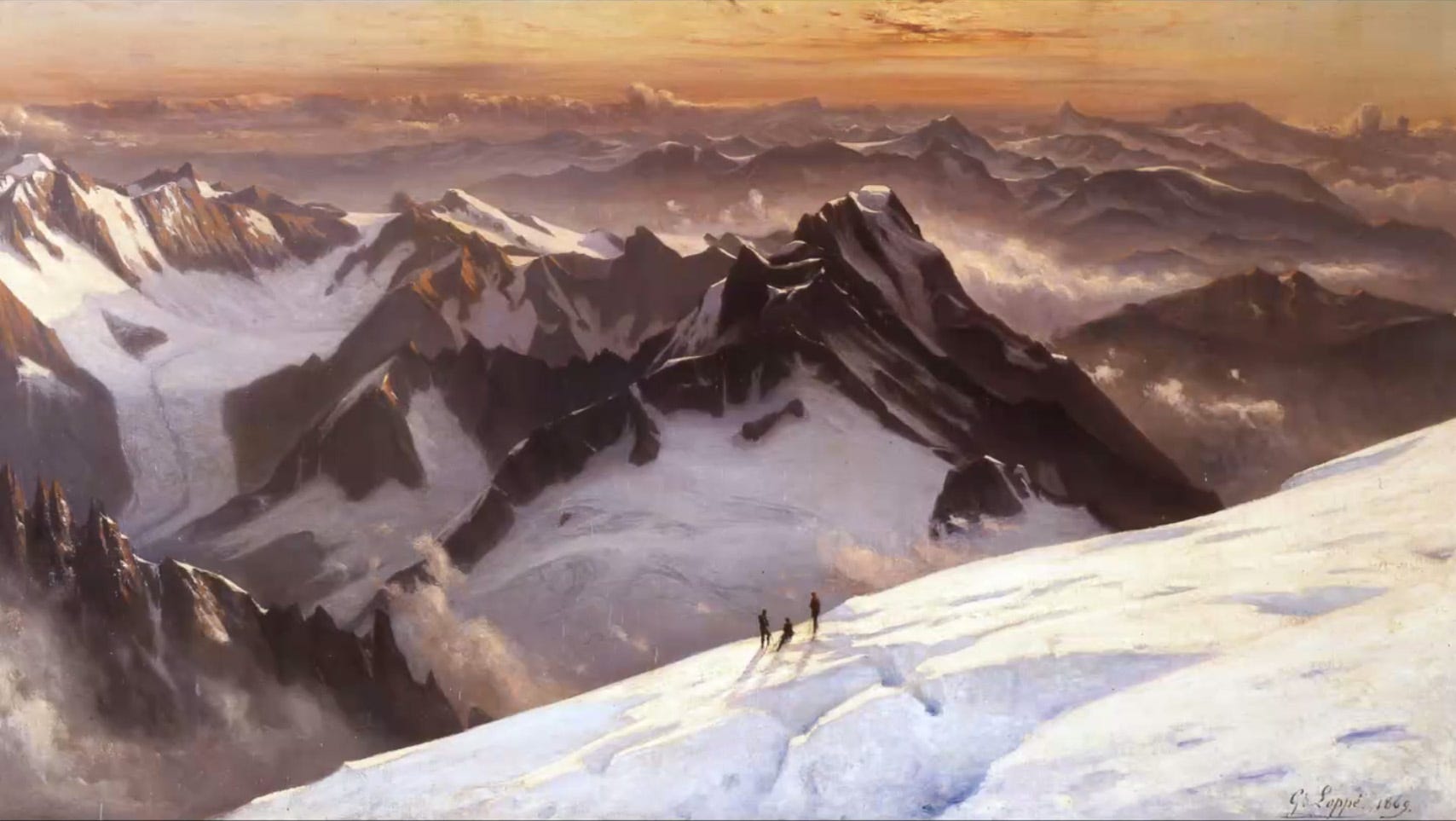
The first ‘photographers’, even before the coming of the camera, were artists and engravers. The likes of M. Gabriel Loppé, with perhaps a somewhat lighter easel but a large and awkward drawing pad, up there on Mont Blanc with his gloves on and his feet freezing, trying to capture the sunset before the water froze in his little water jug.
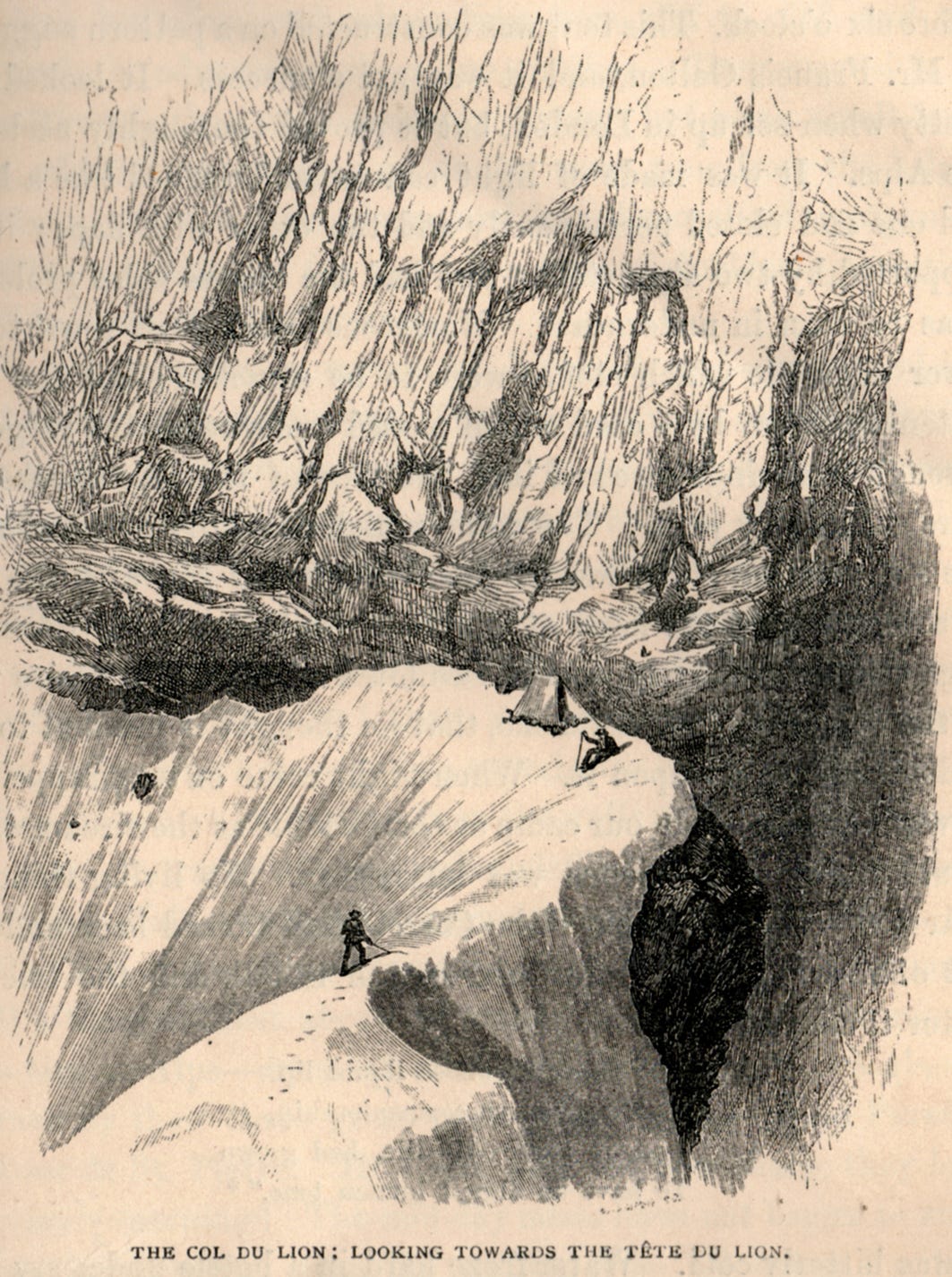
é 1873Or Edward Whymper, financing his assaults on the Matterhorn with his pencil and sketchbook, following up with engravings in copper or steel to hit the mass market via the Illustrated London News. His engraving of the fatal first ascent, and of the mystic fogbow and brocken spectre the survivors saw on the way down: they do seem to be made from memory and the imagination. But this one of the little tent on the Col du Lion, at the base of the Italian Ridge, looks to be authentically taken from life.
And then, when the camera did come along, Whymper was back up the Matterhorn, taking pictures of the precursor of the Hörnli Hut and so becoming the first of the glass plate guys on the high hills.1
But at almost the same time, another action photographer was at it among the Chamonix Aiguilles. Technically not the most perfect photos: but then, Miss Lily Bristow was climbing at the edge of what was possible, on only the third-ever ascent of the technically tricky Grépon.2
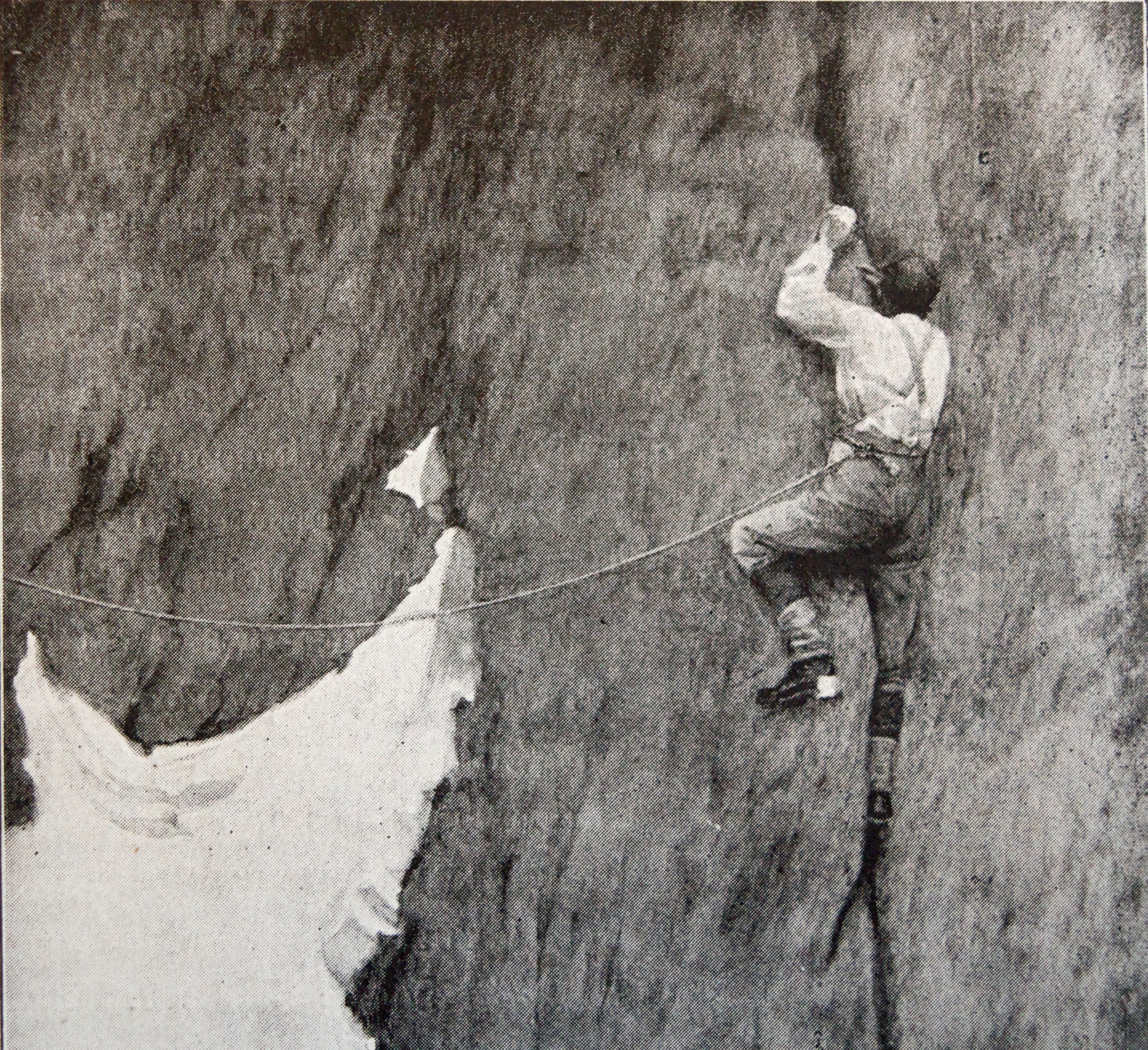
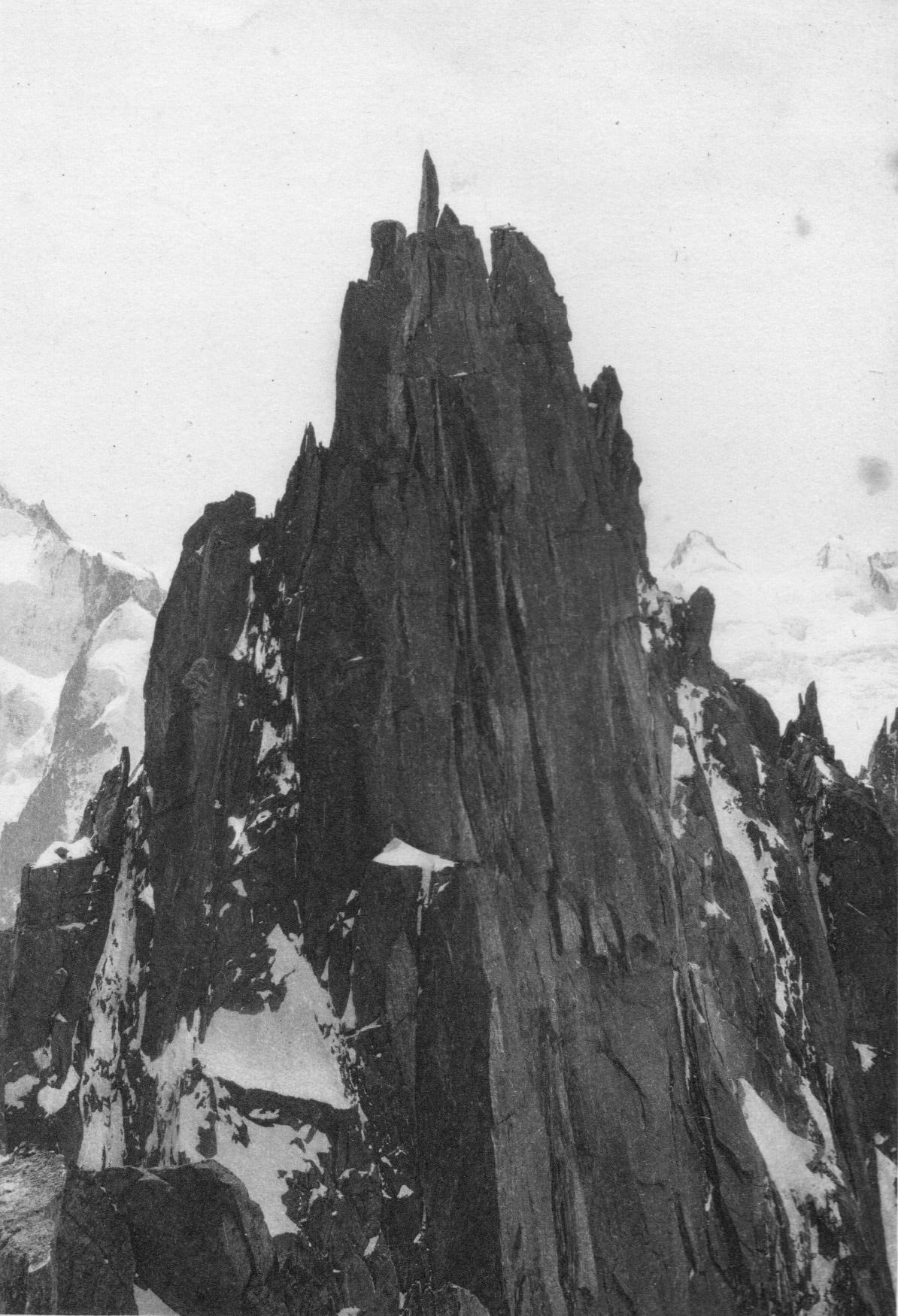
Full frame glass-plate photography: that size eight-inch-by-ten is the glass plate itself, which is a whole lot bigger than your 35mm film. Given a suitably rock-solid tripod, and scrupulous attention to eliminating stray light, and the skill to compose a photo while looking at it upside down and very faint with your head under a black hood- cloth: all this while at the same time perching on a pinnacle or clinging to some rocks: impossible, of course, to produce anything worth looking at under those conditions. Well, it is unless your name happens to be Abraham… Almost a century before John Cleare, and with equipment weighing about ten times as much, they were dangling from ropes while photographing early climbs on Great Gable and even Scafell Crag.
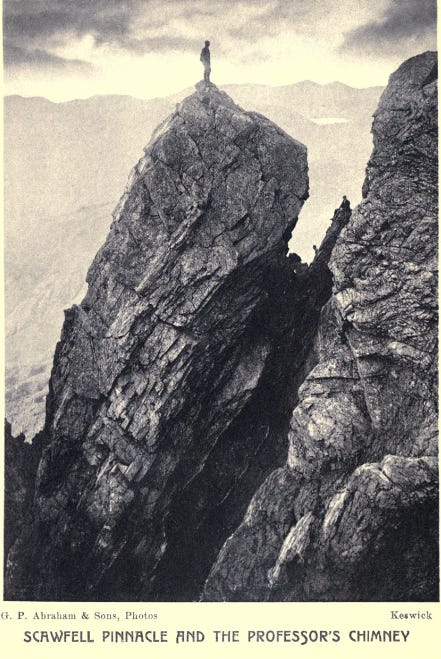
They didn’t know how to spell Scafell: but they could certainly take a picture of it.
And finally, two years before that vest-pocket Leica, the last person to take glass-plate pictures on mountains on the basis that glass plates was what there was to take pictures with: George Mallory himself. Not that he was a serious photographer: the first pictures he took he had the glass plate in the wrong way around, so those ones never even happened. And okay, the mules and the yaks carried the heavy tripod for most of the march in from Darjeeling.
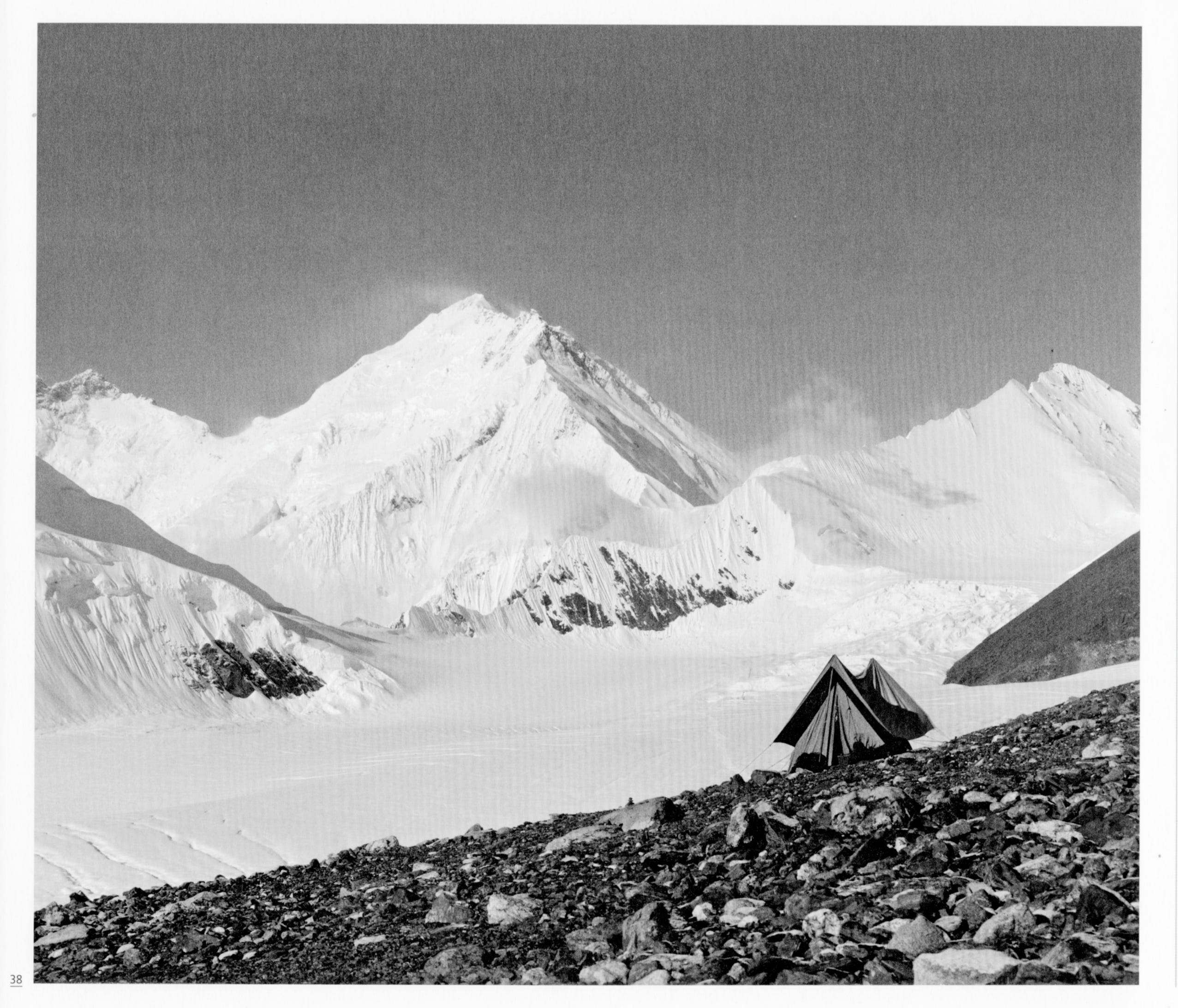
Still, Mallory himeself had to haul the kit up to around 20,000 feet to take the picture s of Everest from high above the Rongbuk Glacier.
Three years later, the advent of the Vest Pocket Leica put an end to all that glass-plate action and made mountain photography possible when previously it really wasn’t.
But still, some of them were up there and at it anyway.
The first I’m aware of, anyway. This would be in the 1870s.
Okay, call it a cop-out if you must, Miss Lily used the slightly less cumbersome half-plate camera with a glass plate of a mere 8 inches by 5.
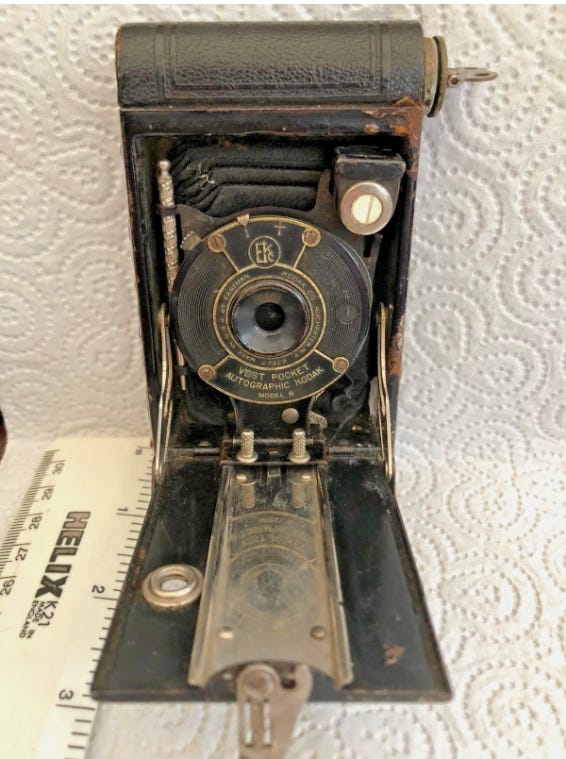
Ronald, this was great – thank you! I'm sure you know this, but Mallory's Vest Pocket camera was a Kodak, not a Leica. They're both small-format cameras but that's where the similarities end; the Leica is 35mm, but the Vest Pocket Kodak takes 127 and is a much simpler camera. The early Leicas only really came to market in the 1920s, by which point pocketable folding cameras (taking a wide variety of formats) had been around for a number of years. And there was a lengthy period in which glass plates and various larger film formats coexisted in a kind of Cambrian Explosion of photographic hardware and competing standards. It was Leica and Kodak, of course, that gradually popularised the 35mm format until most of the other formats lost ground in the market. Today we're just left with 35mm, 120, 5x4 and 10x8 to all practical purposes.
Very much agreed that the large-format plate photography of the early mountain wizards was something special to behold. I've seen a few photographers take this up again in the last couple of years. Personally I think I'll stick with 35mm – bigger film formats are just too rich for me these days!
You're quite right to ridicule the claim that mountain photography only began with pocket cameras. John Cleare (whom we both knew) would certainly have agreed.
Among others, there's Vittorio Sella, who apparently sometimes used 30×40 cm plates, significantly bigger even than 10x8 ins. And of course Ansel Adams, who certainly took photography into the mountains, if not to difficult summits.
I'm very aware of the Abraham Brothers, since one of my first jobs was as a porter in the art gallery at Lancaster University, and we staged an exhibition of their work, so I had ample opportunity to study the prints closely. As a novice rock climber at the time, as well as a photographer, I was very much in awe—and sometimes alarmed at the obvious lack of meaningful protection.
More recently, there are people like David Breashears, who carried an IMAX camera to the top of Everest in 1996. Today most people would think you were a bit weird if you even carried something as 'cumbersome' as a Nikon D850 on the Snowdon Horseshoe.
I'll admit to scaling down to a 35mm rangefinder (Olymous 35RC) at times on harder rock climbs, but often carried an SLR (35mm and then digital). On the Biafo—Hispar trek I had two 35mm SLR bodies, three lenses, a teleconverter, and 25 rolls of film.