
Lake District : happy 75th!
A birthday card traditionally has a picture on the front and an emotive little poem on the inside. So here’s a greeting to England’s best loved hill district, designated national park on May 9th 1951.

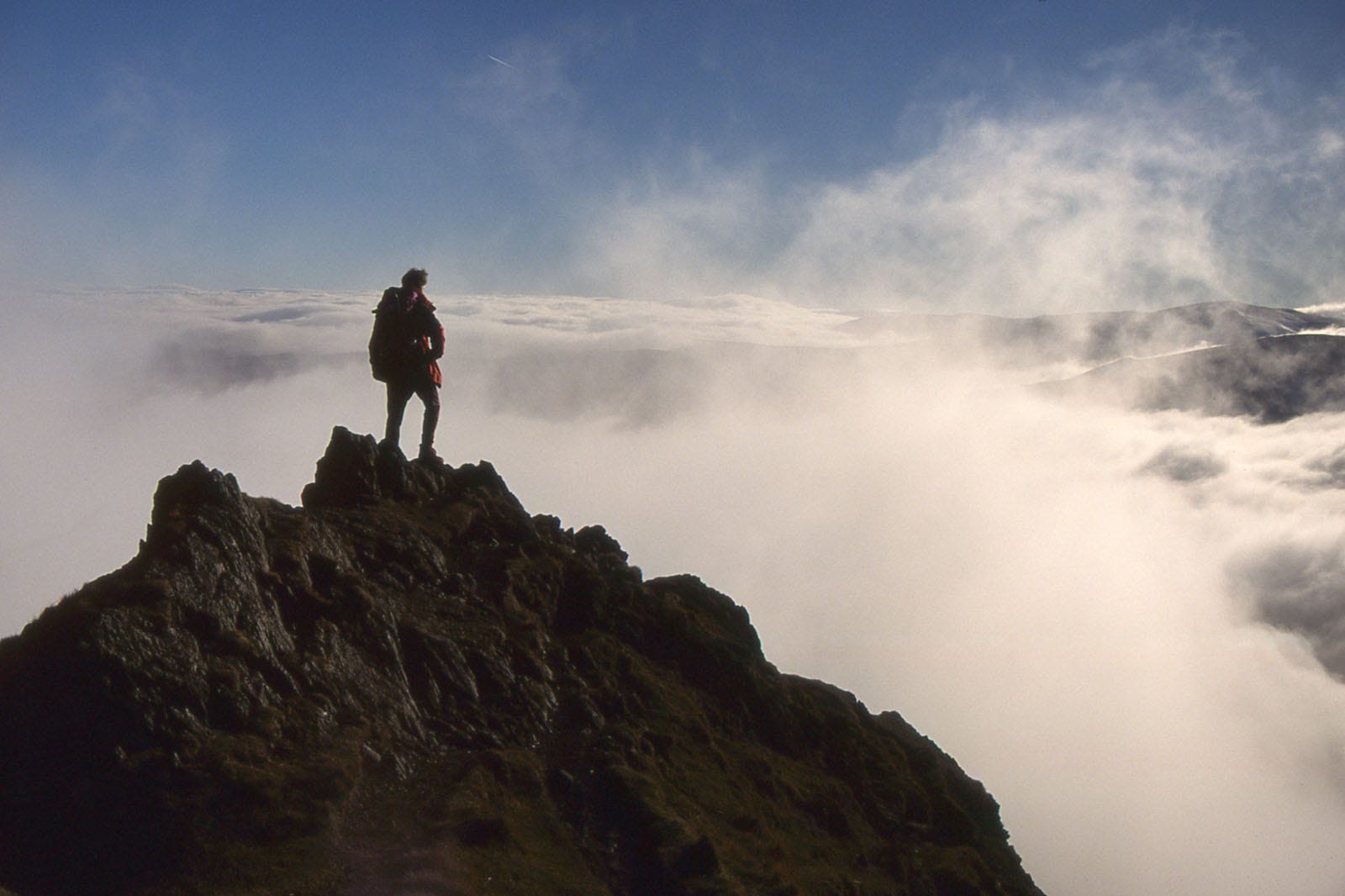
And note, I do not refer to the “English” Lake District. The RAF is the original air force; Royal Mail is the first ever postal service and doesn’t need the UK's name on it. And the country of Cumberland is the original and only Lake District, of which all the rest are Johnny-come-lately imitations.
It’s hard to believe that, a mere quarter-millennium ago, people looked at all this and didn't like it. Indeed, they were disgusted by the useless and ugly precipices, the scruffy oakwoods. Either that or they were scared it was all going to fall down on their heads. It was here in Lakeland, around the year 1780, that it suddenly became cool to stand around in the rain, looking at scenery that included some stones and rocks.
Today, 30 million visitors a year agree with this proposition. And the Lake District, 450 million years old in its rocks and stones, age 14,000 in its glaciates shapes, and 250 in its status as a cultural artefact, on Saturday celebrates its 75th birthday as a designated national park.
If viewing on email, this newsletter may get cut short because I’m going to go on and on about Lakeland. You could hit ‘view online’ up at the top.
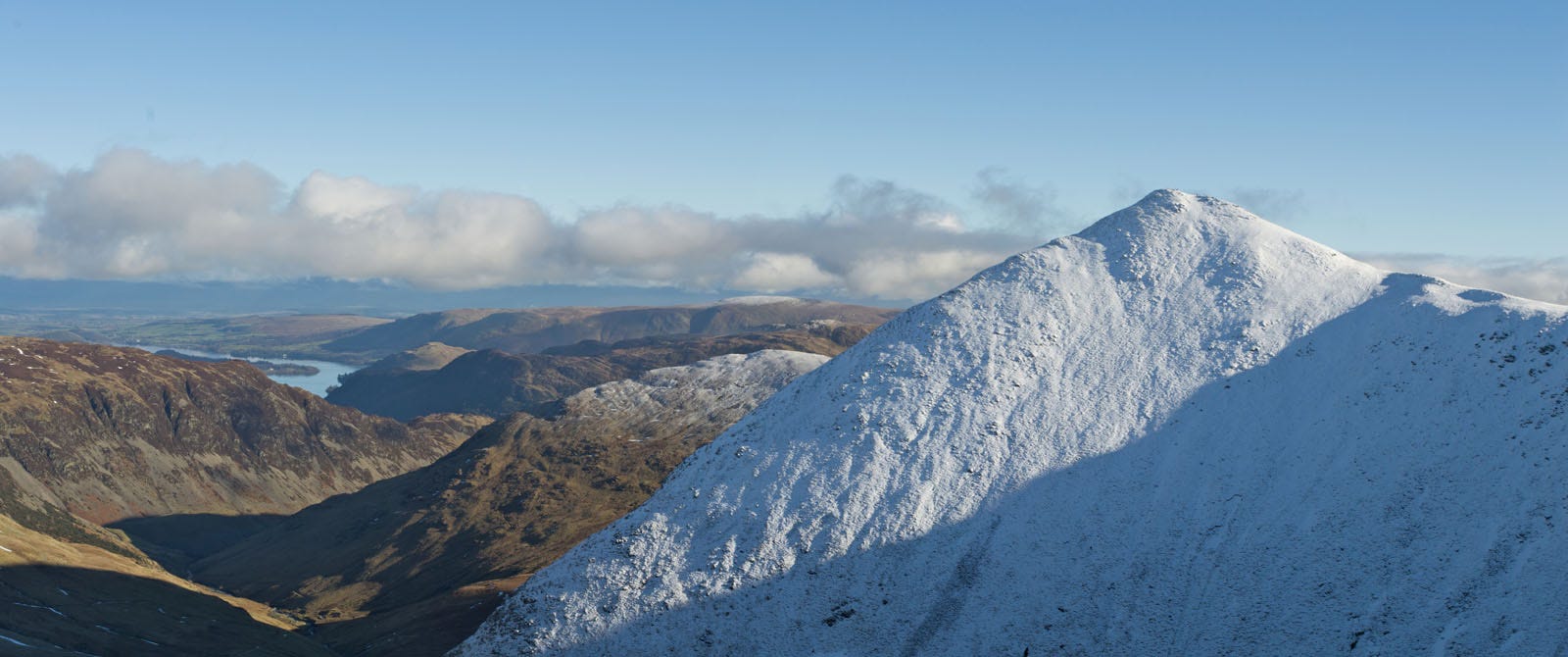
On Her First Ascent to Helvellyn
Inmate of a mountain-dwelling,
Thou hast clomb aloft, and gazed
From the watch-towers of Helvellyn;
Awed, delighted, and amazed!
Potent was the spell that bound thee
Not unwilling to obey;
For blue Ether’s arms, flung round thee,
Stilled the pantings of dismay.
Lo! the dwindled woods and meadows;
What a vast abyss is there!
Lo! the clouds, the solemn shadows,
And the glistenings – heavenly fair!
And a record of commotion
Which a thousand ridges yield;
Ridge, and gulf, and distant ocean
Gleaming like a silver shield!
For the power of hills is on thee,
As was witnessed through thine eye
Then, when old Helvellyn won thee
To confess their majesty!
William Wordsworth addresses his sister Dorothy in 1816
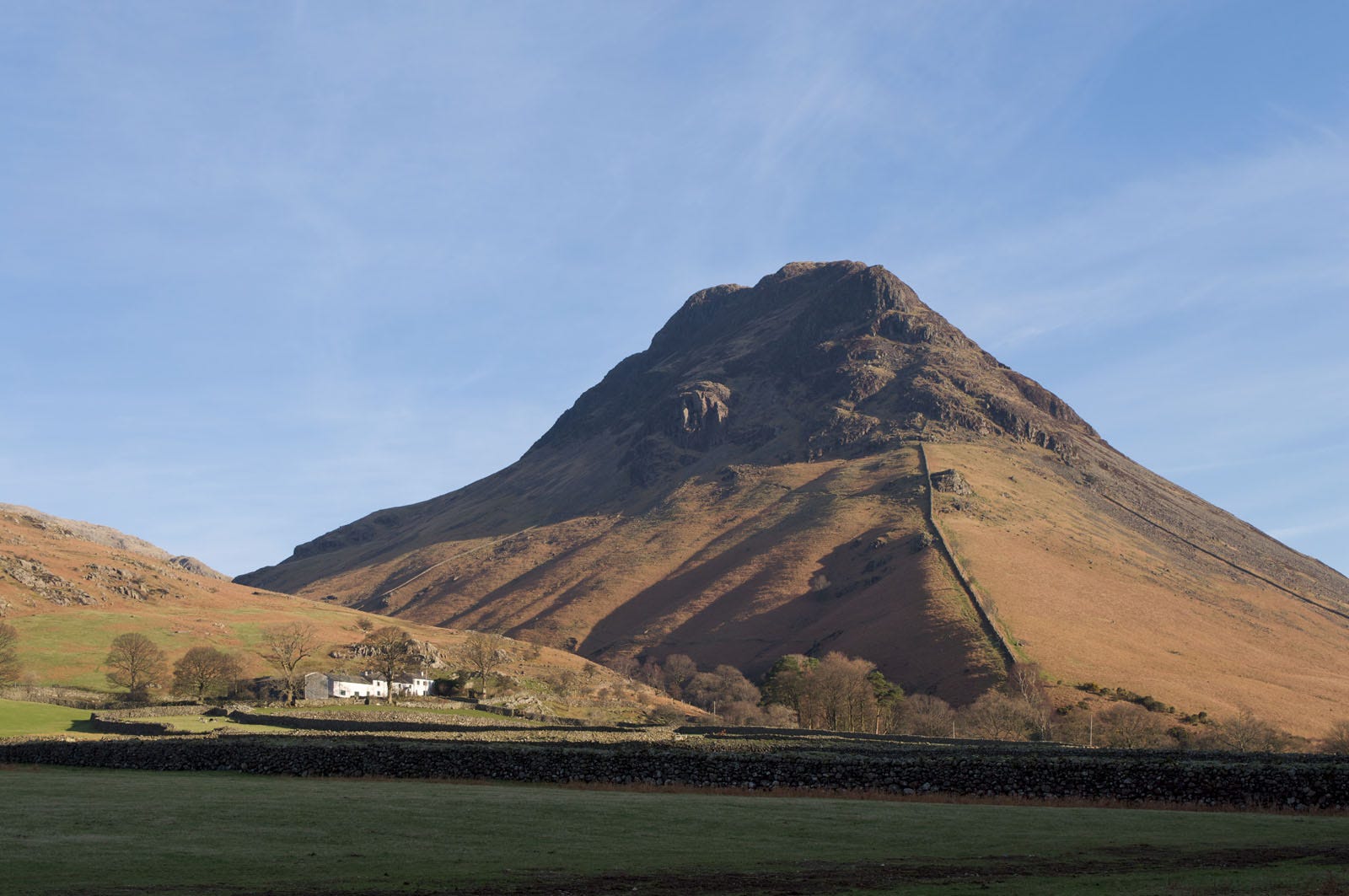
Am I
To see in the Lake District, then,
Another bourgeois invention like the piano?
Well, I won’t. How can I, when
I wish I stood now on a platform at Penrith,
Zurich, or any junction at which you leave the express
For a local that swerves off soon into a cutting? Soon
Tunnels begin, red farms disappear,
Hedges turn to walls,
Cows become sheep, you smell peat or pinewood, you hear
Your first waterfalls.
And what looked like a wall turns out to be a world
With measurements of its own …
WH Auden: from ‘Mountains’ (1954)
Then, because his wound was deep,
The bold Sir Bedivere uplifted him,
And bore him to a chapel nigh the field,
A broken chancel with a broken cross,
That stood on a dark strait of barren land:
On one side lay the Ocean, and on one
Lay a great water, and the moon was full.
So saying, from the ruin’d shrine he stept,
And in the moon athwart the place of tombs,
Where lay the mighty bones of ancient men,
Old knights, and over them the sea-wind sang
Shrill, chill, with flakes of foam. He, stepping down
By zigzag paths, and juts of pointed rock,
Came on the shining levels of the lake.
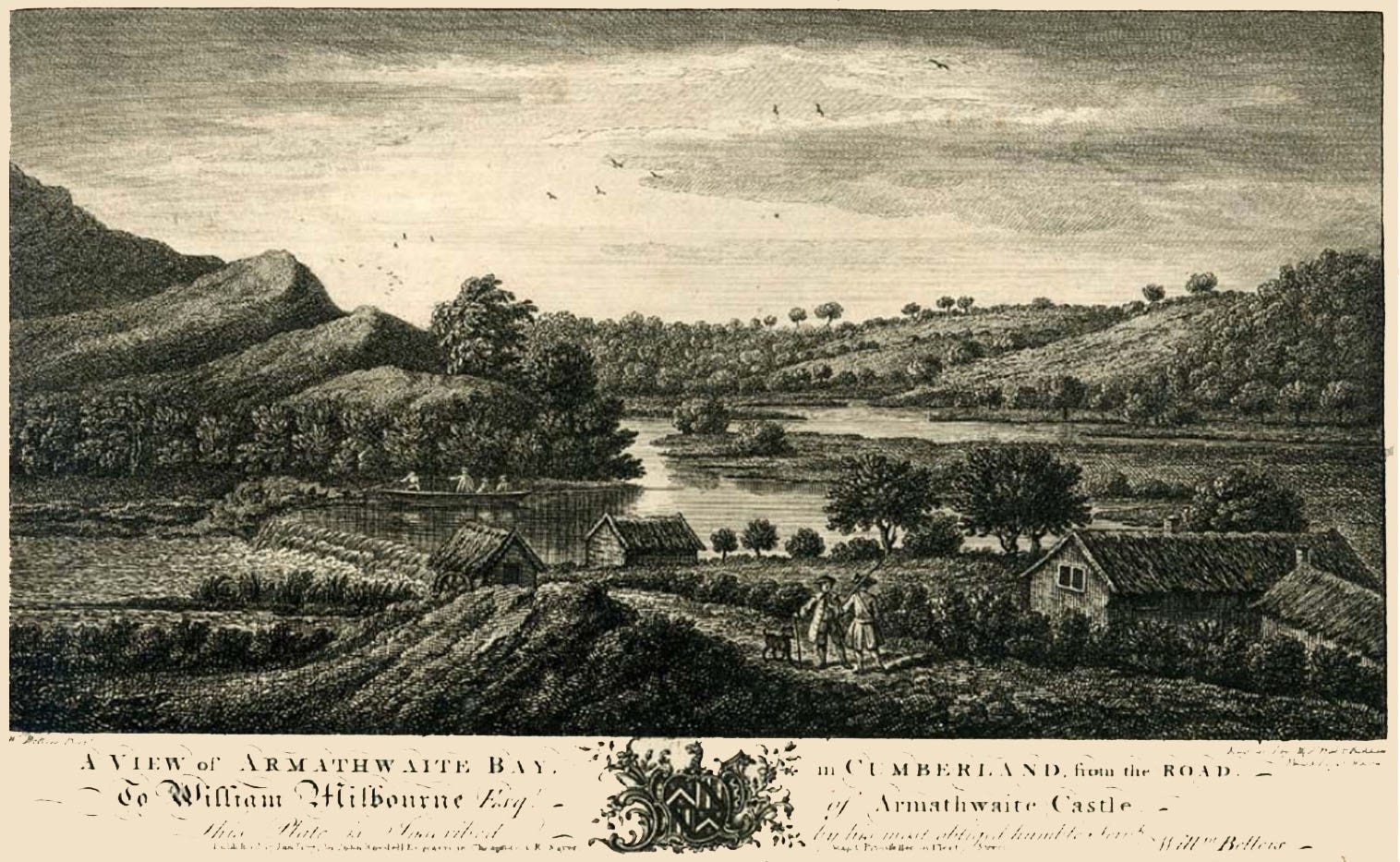
Tennyson, ‘The Passing of Arthur” composed while staying at Mirehouse on the shore of Bassenthwaite Lake
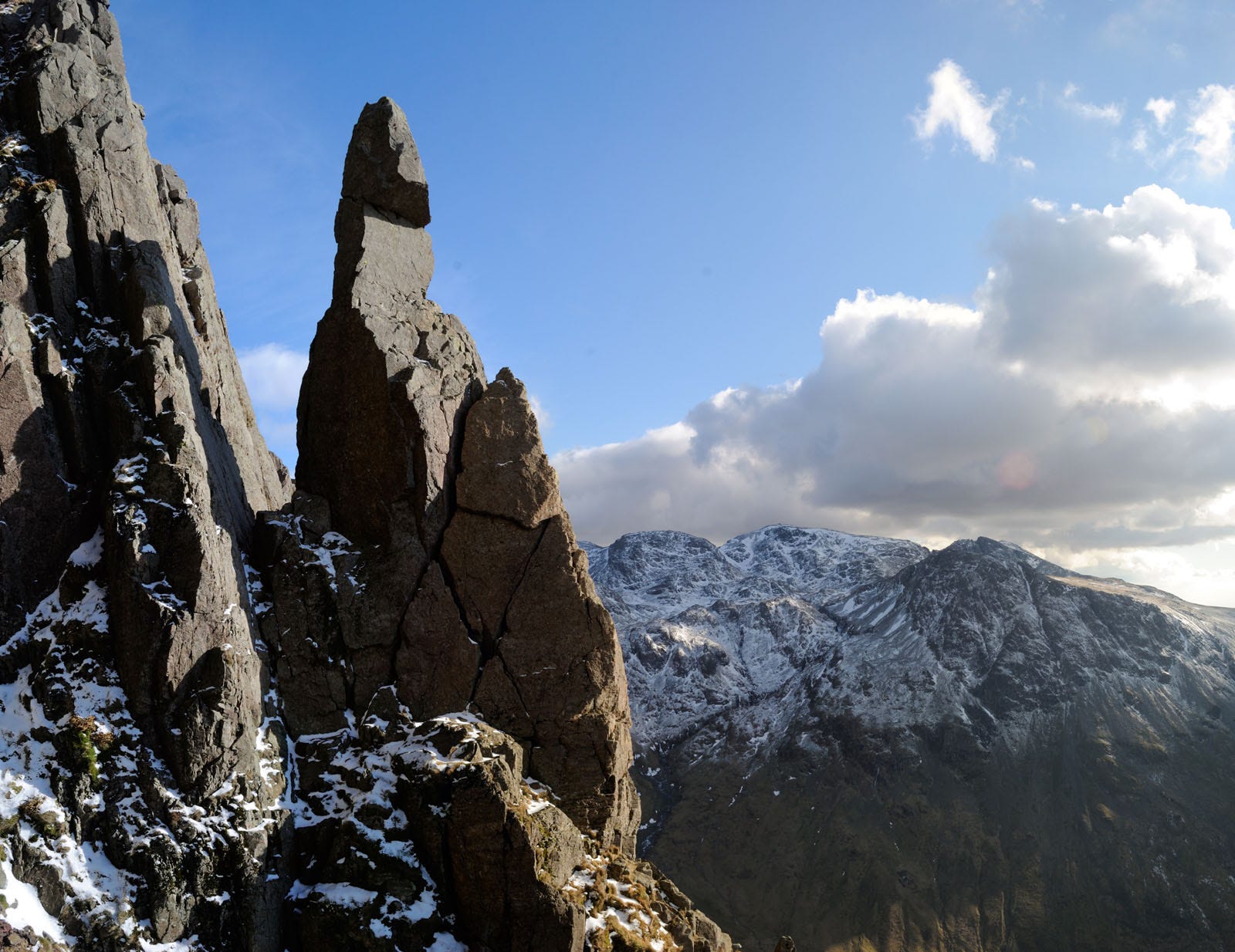
There must be something in this rope business, or people wouldn’t carry them about. If I fell, I could only fall thirty feet. It was absurd to suppose that I should then break in half… no, I should simply dangle for a little, assure Ken’s anxious head that all the blood he saw everywhere was only where I had hit myself on the way down, and then climb gaily up the rope to safety. Oh, well…
It was delightful to sit on top of the Needle and dangle our legs, and think ‘We’ve done it’. About once every ten years it comes back to me that, in addition to all the things I can’t do and haven’t done, I have climbed the Napes Needle.
A A Milne, climbing in 1901, from It’s Too Late Now.
Dorothy Wordsworth: Sunday 31st January 1802
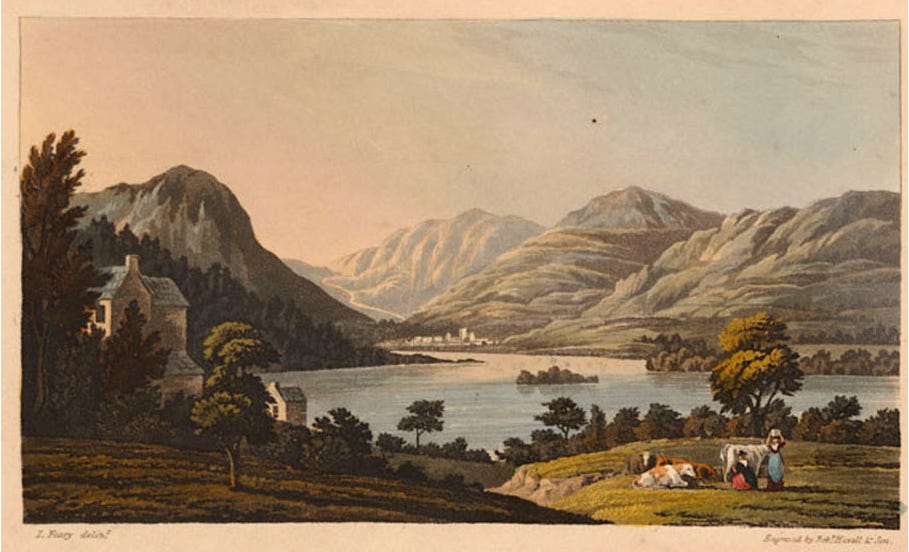
We amused ourselves for a long time in watching the breezes, some as if they came from the bottom of the lake, spread in a circle, brushing along the surface of the water, and growing more delicate as it were thinner, and of a paler colour till they died away. Others spread out like a peacock’s tail, and some went right forward this way and that in all directions. The lake was still where these breezes were not, but they made it all alive. I found a strawberry blossom in a rock.
from the Grasmere Journal
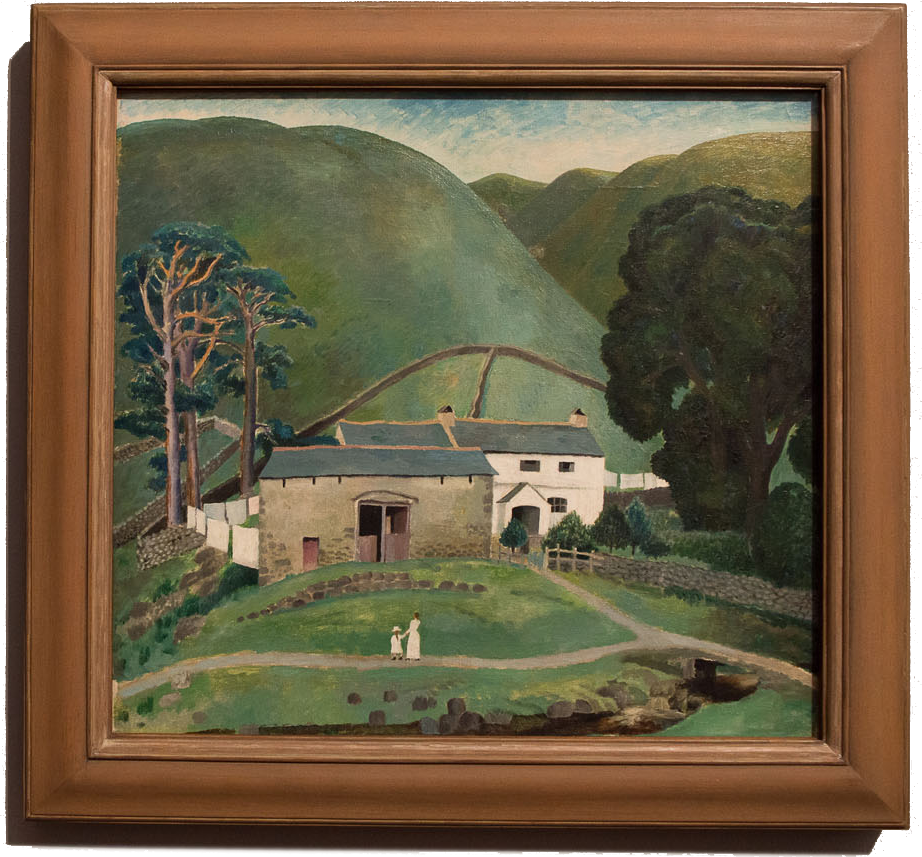
As I lie in bed I walk step by step on the fells and rough land seeing every stone and flower and patch of bog and cotton grass where my old legs shall never take me again.
Beatrix Potter writing at the end of her life
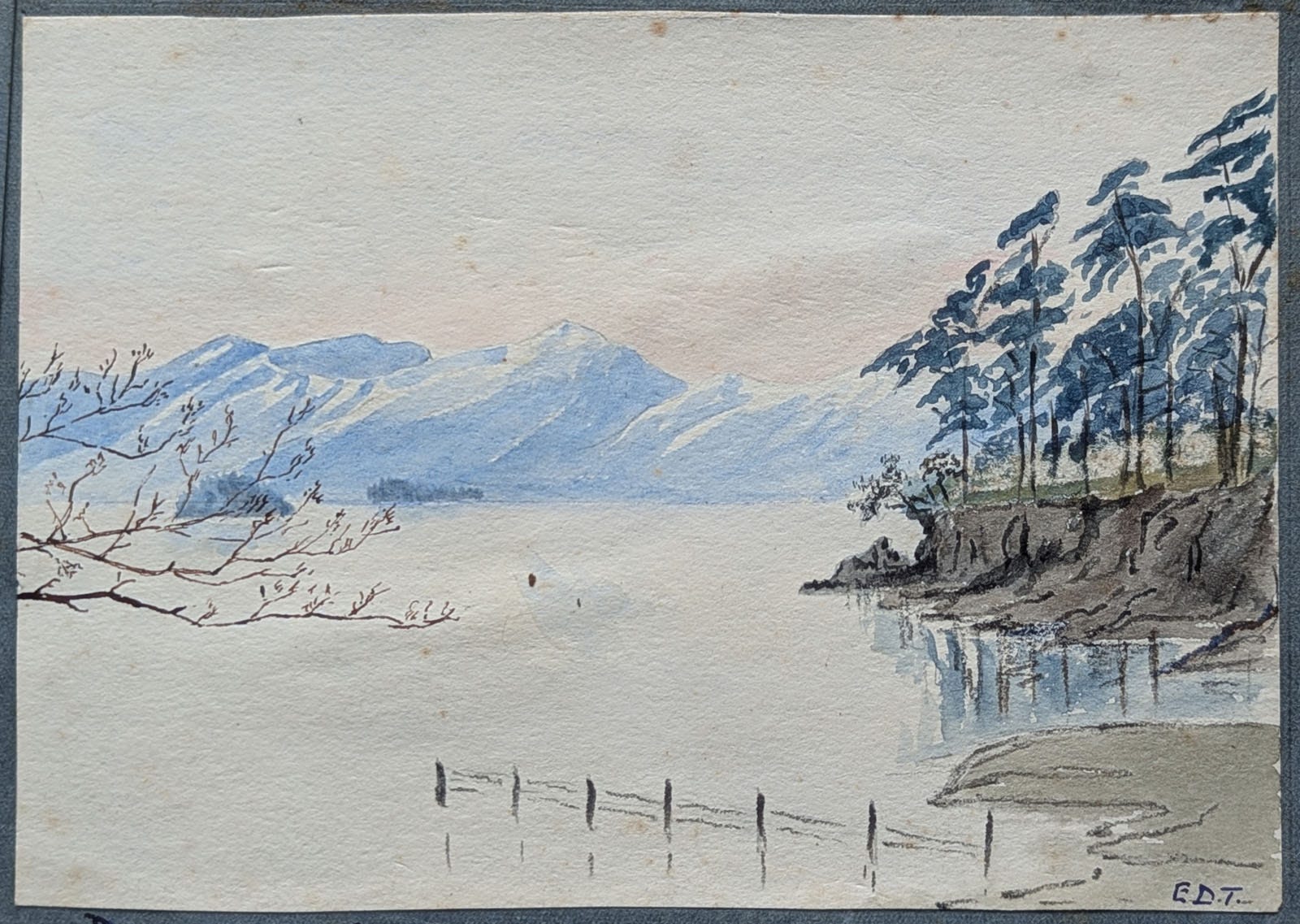
Sometimes, we looked into tremendous chasms, where the torrent, heard roaring long before it was seen, had worked itself a deep channel, and fell from ledge to ledge, foaming and shining amidst the dark rock. These streams are sublime from the length and precipitancy of their course, which, hurrying the sight with them into the abyss, act, as it were, in sympathy upon the nerves, and, to save ourselves from following, we recoil from the view with involuntary horror…
The air now became very thin, and the steeps still more difficult of ascent; but it was often delightful to look down into the green hollows of the mountain, among pastoral scenes, that wanted only some mixture of wood to render them enchanting.
About a mile from the summit, the way was, indeed, dreadfully sublime, laying, for nearly half a mile, along the ledge of a precipice, that passed, with a swift descent, for probably near a mile, into a glen within the heart of Skiddaw; and not a bush, or a hillock interrupted its vast length, or, by offering a mid-way check in the descent, diminished the fear it inspired.
Gothic novelist Ann Radcliffe climbs Skiddaw, the last recorded person to suffer altitude sickness on 920m Skiddaw (from ‘A Journey Made in the Summer of 1794’)
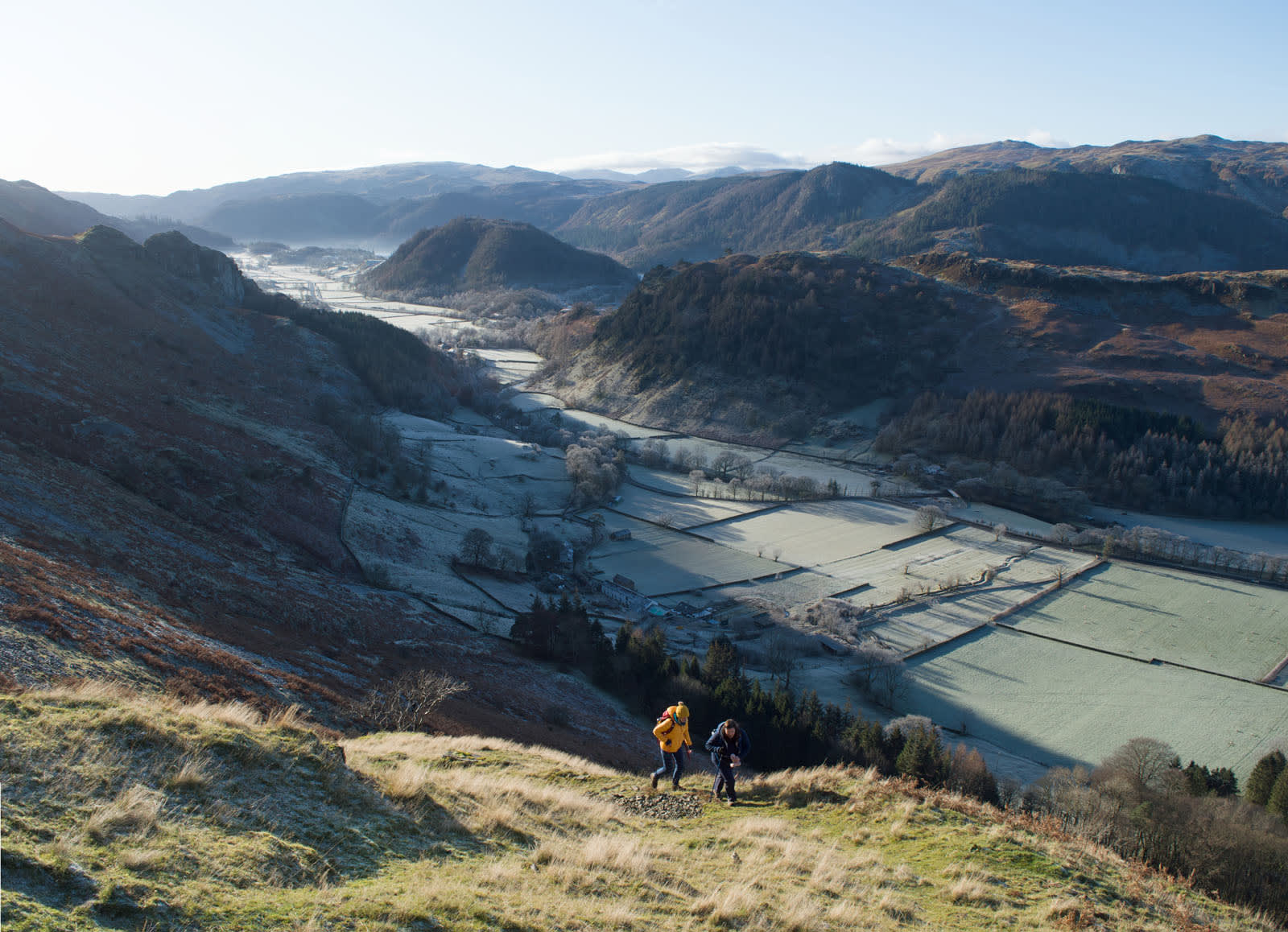
Lakeland rain
“If today is anything to go by, I’m not surprised this place is full of lakes!” Kurt Diemberger, trying to film an ice climb in Lakeland (from Clouds on Both Sides, Julie Tullis)
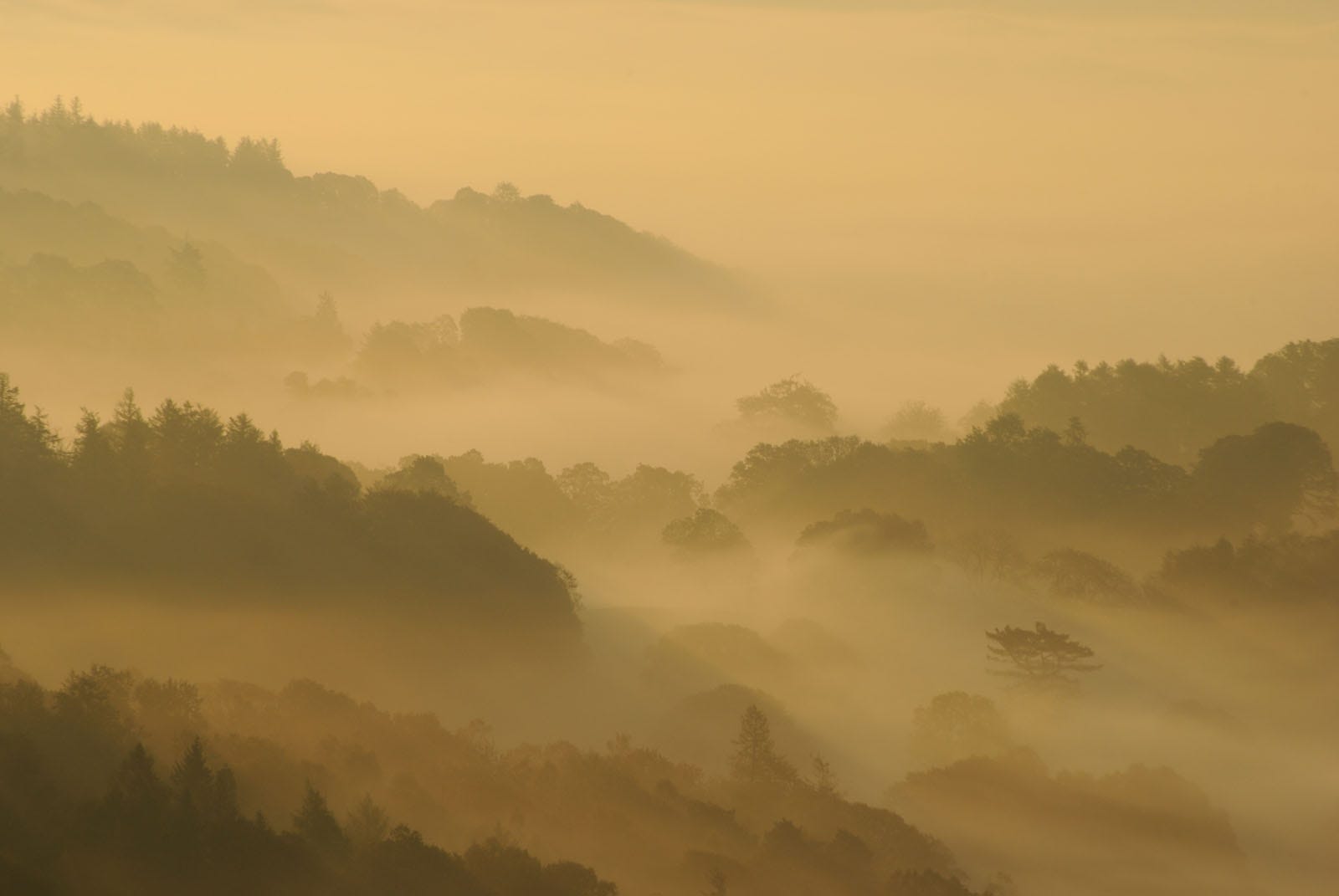
It was rain of a relentless, determined, soaking, penetrating kind. No other rain anywhere, at least in the British Isles (which has a prerogative of many sorts of rain), falls with so determined a fanatic obstinacy as does this rain. It is not that the sky in any deliberate mood decides to empty itself. It is rain that has but little connection either with earth or sky, but rather has a life of its own, stern, remorseless and kindly. It falls in sheets of steely straightness, and through it is the rhythm of the beating hammer.
Rain in Borrowdale, from ‘Rogue Herries’ Hugh Walpole 1930
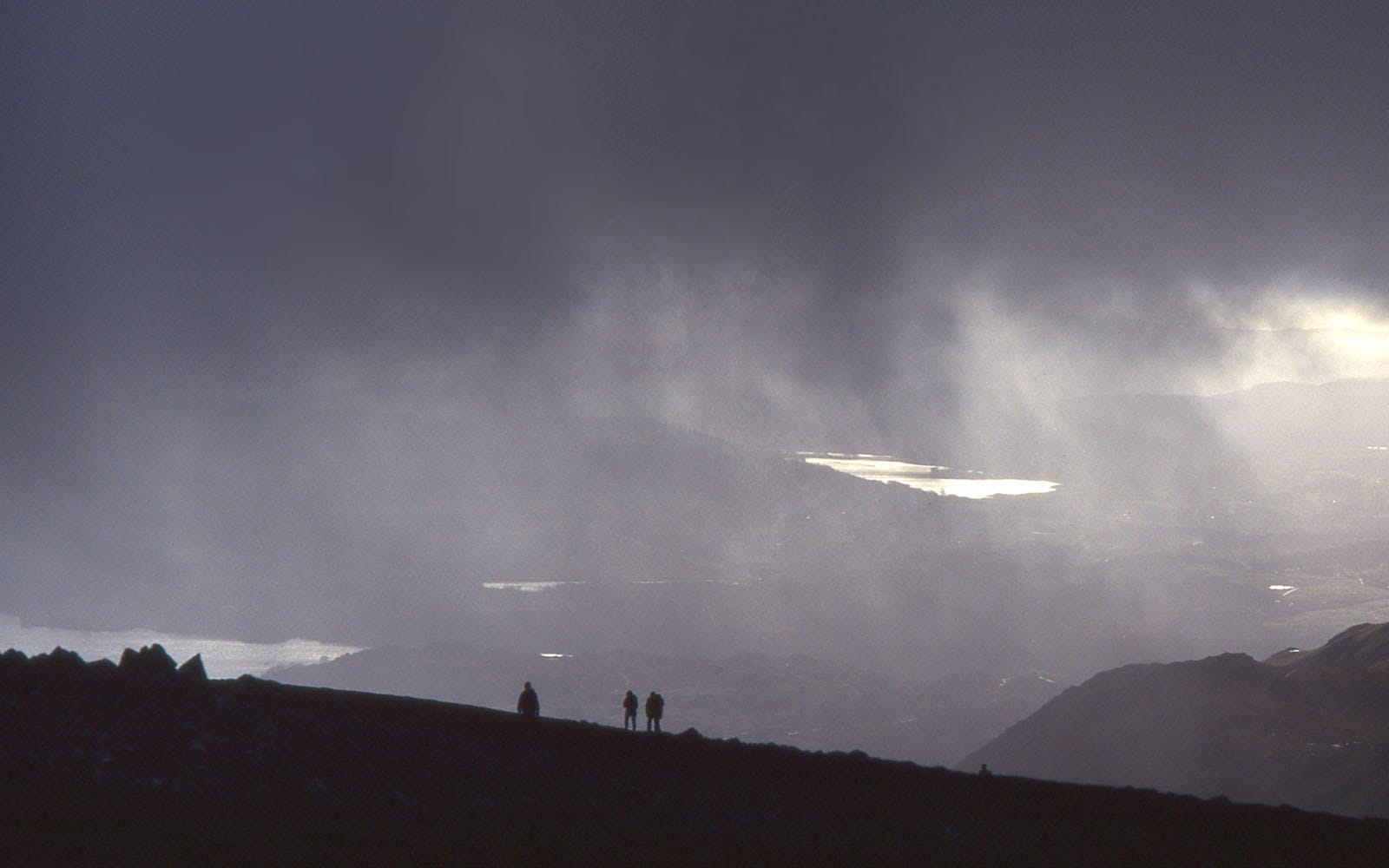
Haweswater rain
The rain comes as if out of nowhere. Suddenly it is fat and fast, warm in the air. A strong breeze the only warning of the impending torrent. Then the sky is gone above cloud, and a fractured column of water rests between the hills. Anything living in the valley heads for the nearest place of shelter. Sheep into wall corners, rabbits back into the maze of warrens within ground, and the villagers, if they are out, find the cover of trees or neighbours’ houses. The summer cuckoo at the far end of the dale lets up. Everything sentient is moving, except for the half-wild fell ponies, which stand absolutely still in the rain. Pure to it. They stand in the meadow’s long grass, afraid to move, or perhaps contented in the downpour. Six or seven white animals, static, steaming with heat, the sweet odour of their rough coats trapped in the mist of water now filling the valley. A small swish of a coarse tail. Nothing more. Beads of water collecting in their beards, and on their backs, shining.
Sarah Hall ‘Haweswater’
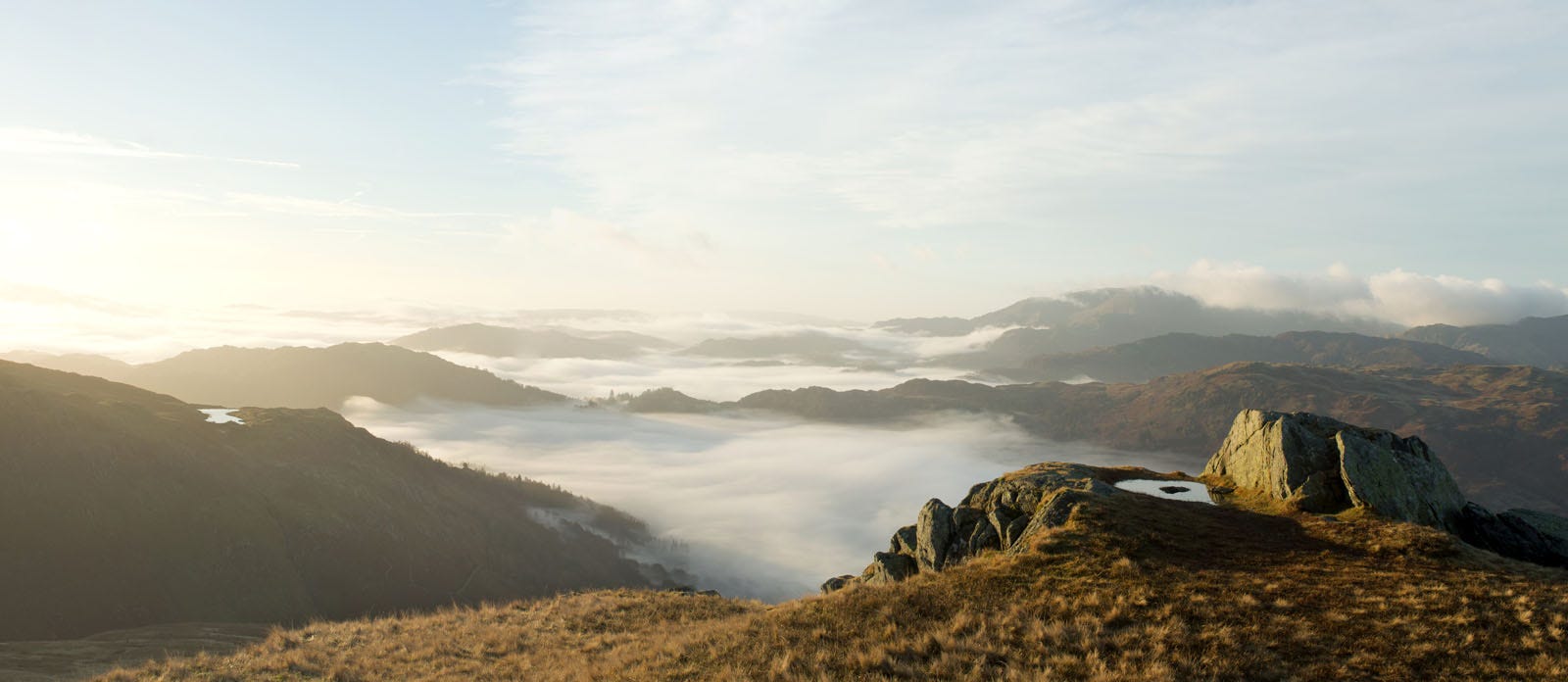
Sea to the West
When the sea’s to the west
The evenings are one dazzle –
You can find no sign of water.
Sun upflows the horizon;
Waves of shine
Heave, crest, fracture,
Explode on the shore;
The wide day burns
In the incandescent mantle of the air….
The sea to the west,
The land darkening –
Let my eyes at the last be blinded
Not by the dark
But by the dazzle.
Norman Nicholson (who’s from Millom at the SW corner of the Lake District)
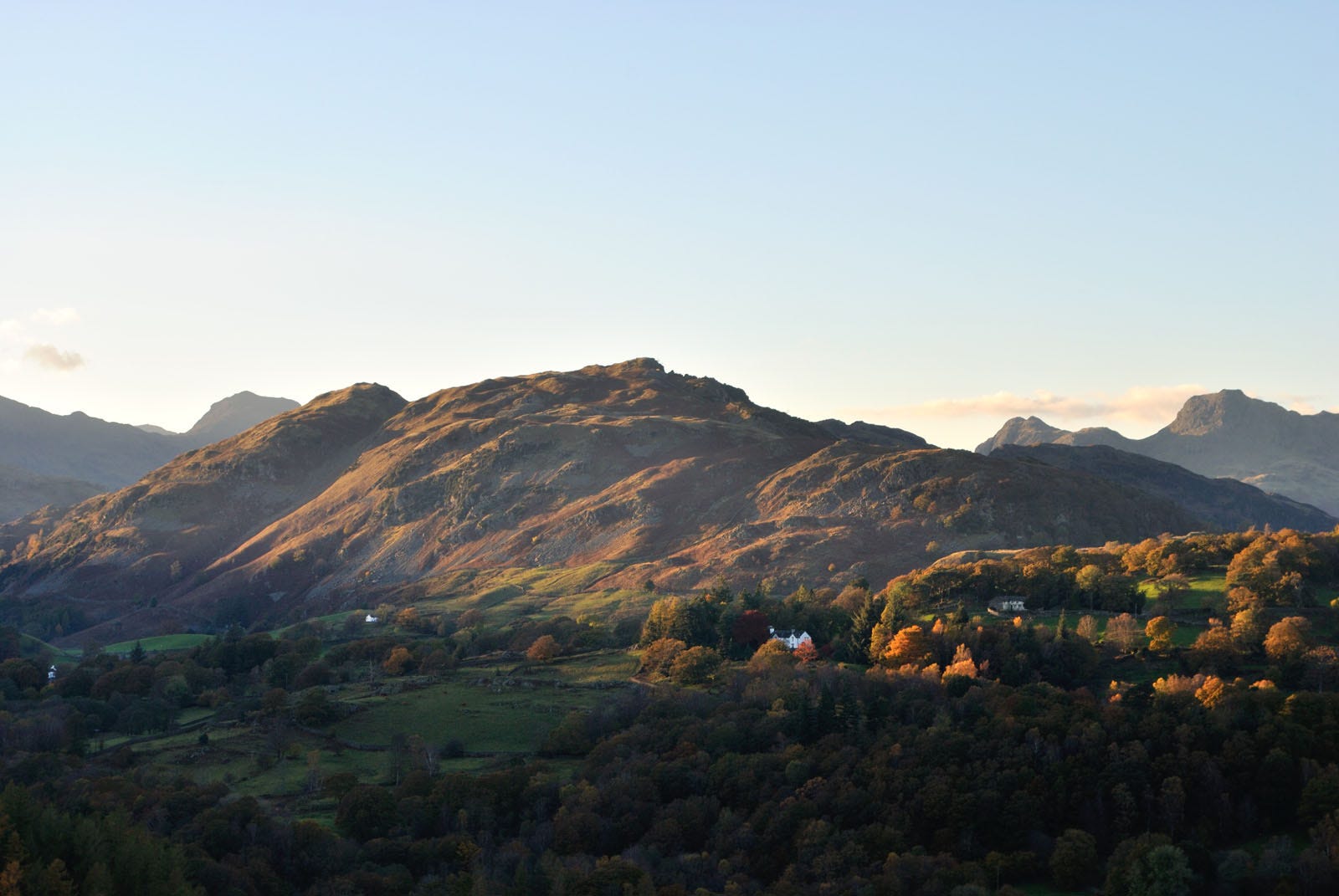
Scafell Pike
“Clearer than Scafell Pike, my heart has stamped on
The view from Birmingham to Wolverhampton.”
WH Auden
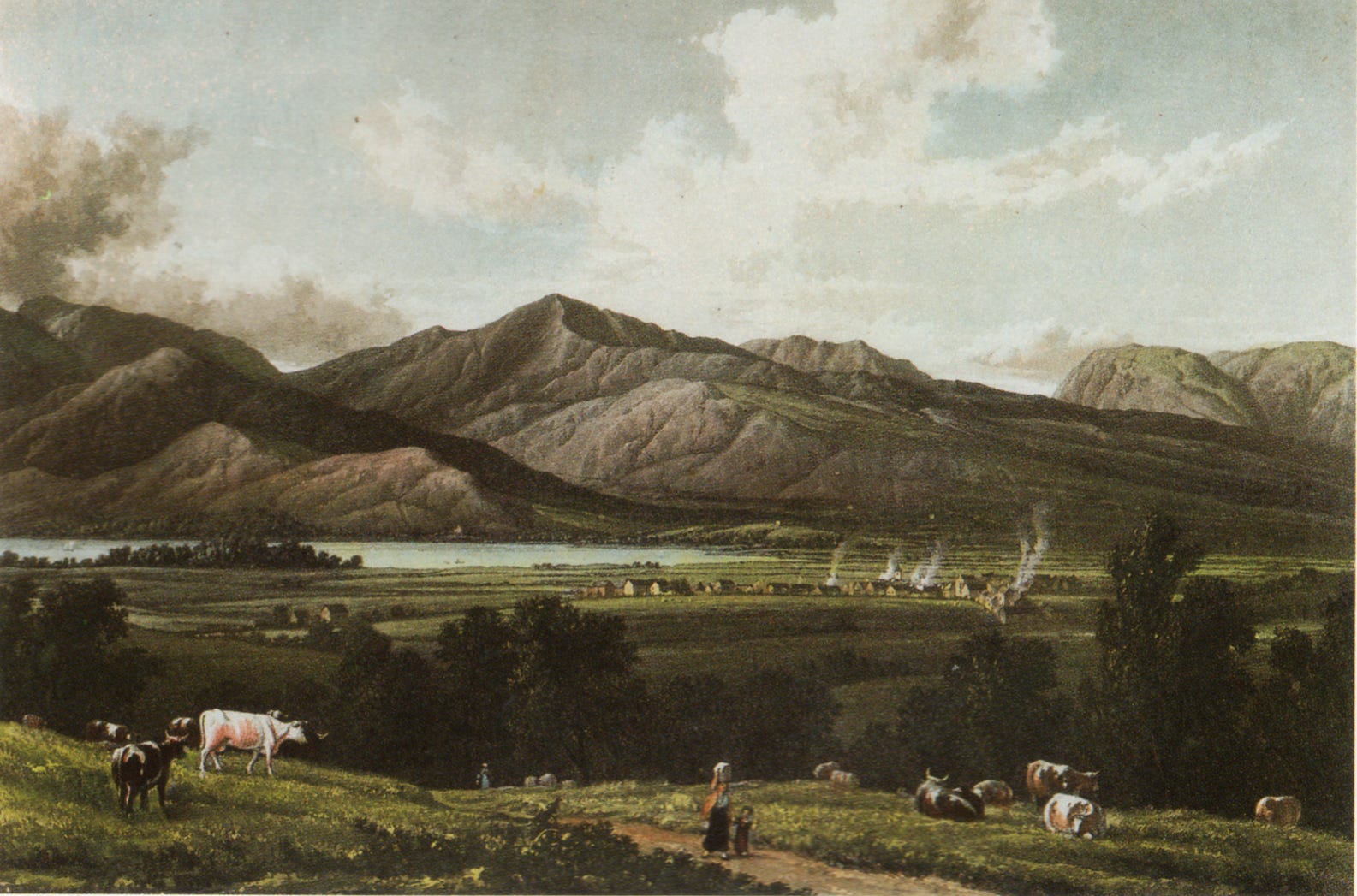
A thought suggested by a view of Saddleback in Cumberland
On stern Blencartha’s perilous height
The winds are tyrannous and strong;
And flashing forth unsteady light
From stern Blencartha’s skiey height,
As loud the torrents throng!
Beneath the moon, in gentle weather,
They bind the earth and sky together.
But oh! the sky and all its forms, how quiet!
The things that seek the earth, how full of noise and riot!
Samuel Taylor Coleridge, 1810s (Saddleback is an alternative name for Blencathra)
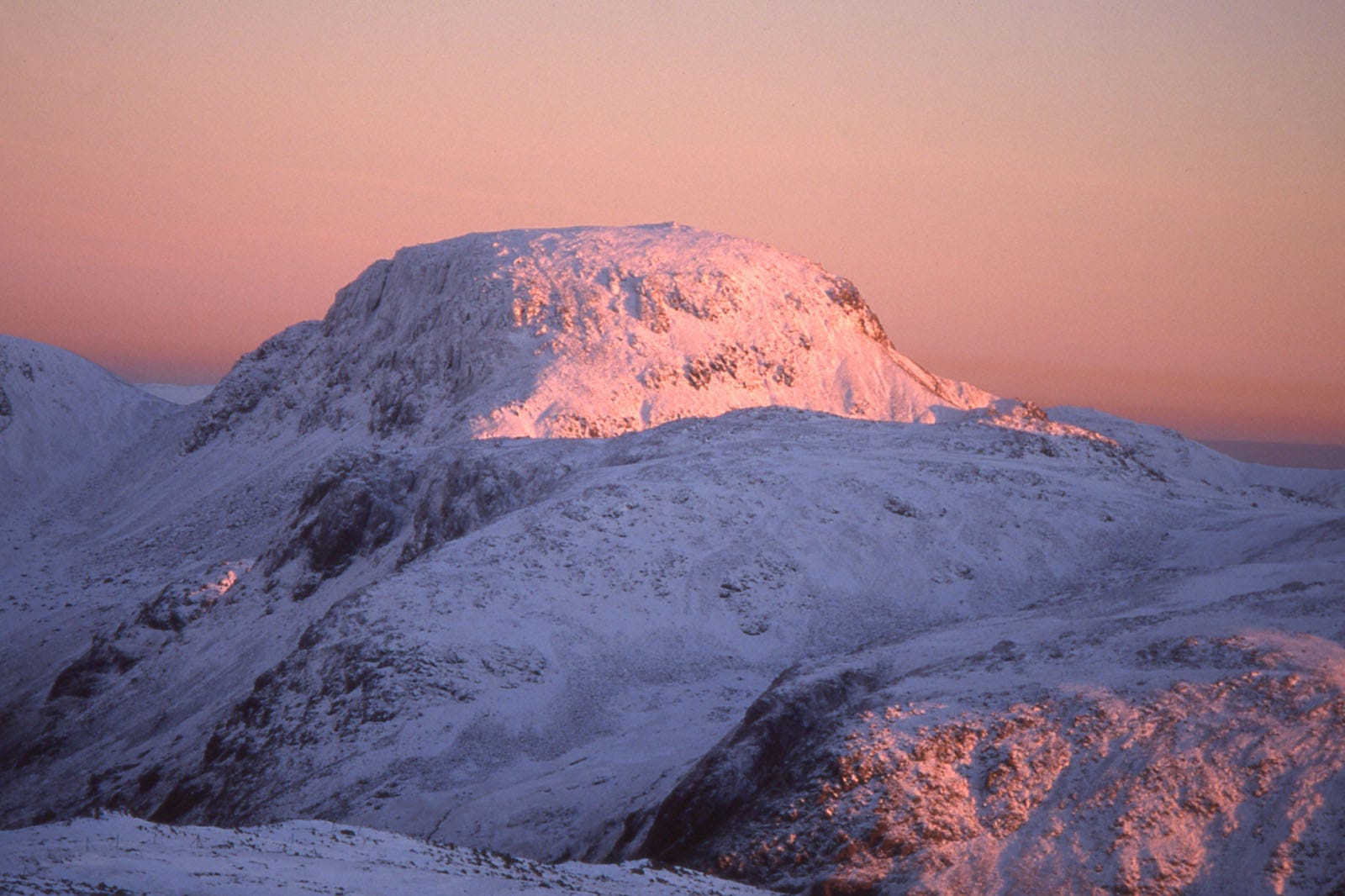
Great Gable
It’s you I should be seeing tonight
I know it’s getting late
so I’m calling to state
that I’m really not able
cos it’s just so great up here on Great Gable
in the evening light, it’s alright.
I know it was the plan
but I don’t know if I can
as the sun goes down like a circus clown behind the Isle of Man
I’m missing the kissing and I really ought to go
there’s the crimson glow
and the sunset light
the moonbeams like a nightie cross the bosoms of the night
So I should be dashing
for an evening of passion
and a night of practical porn
but these lighting effects
are better than sex
and I’m not coming down till dawn1
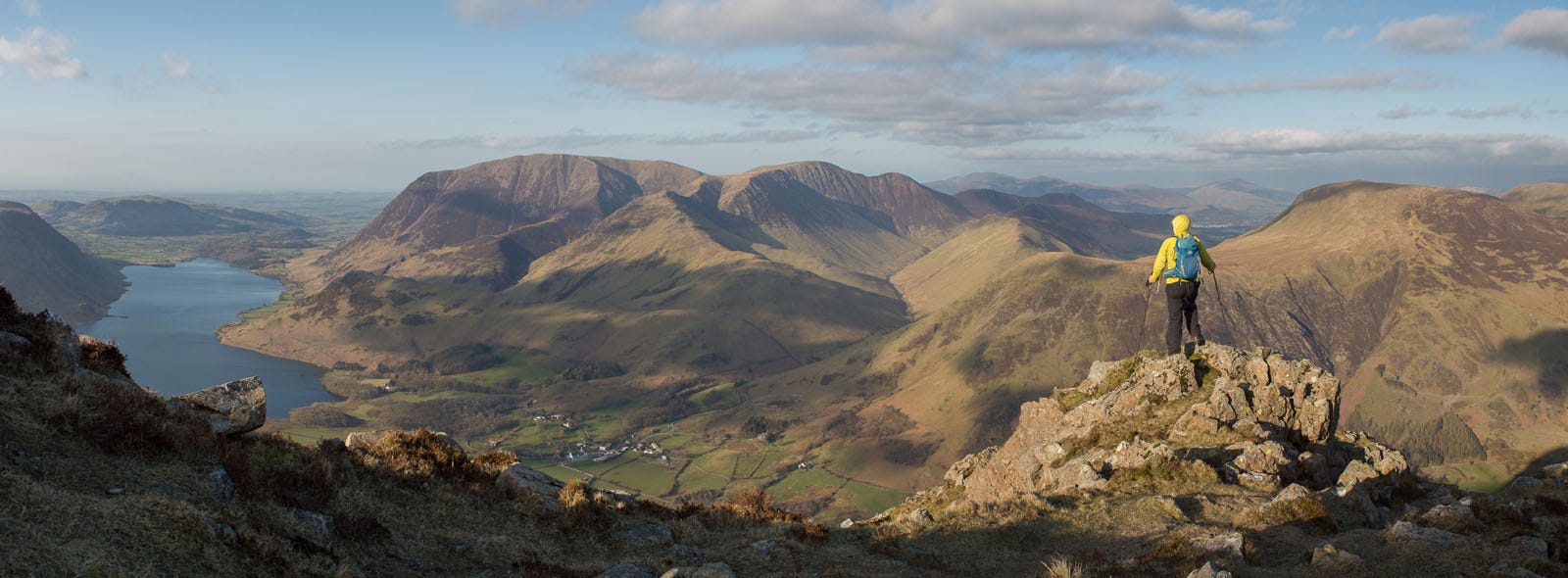
Yes, that one’s by me. Sorry!
Lengthy piece. Thoughtful. Had to slow down for the poetry. Granny Turnbull was a talented water colourist. I particularly enjoyed "Gothic novelist Ann Radcliffe climbs Skiddaw, the last recorded person to suffer altitude sickness on 920m Skiddaw”. Too much to praise in fact. One little gripe, if such it be, is the use of metric measure when we’re in fact inhabiting the world of our forebears. Certainly my noggin stalls, and loses the thread whilst translating meters to proper feet and inches. Restarts with; now where were we…?